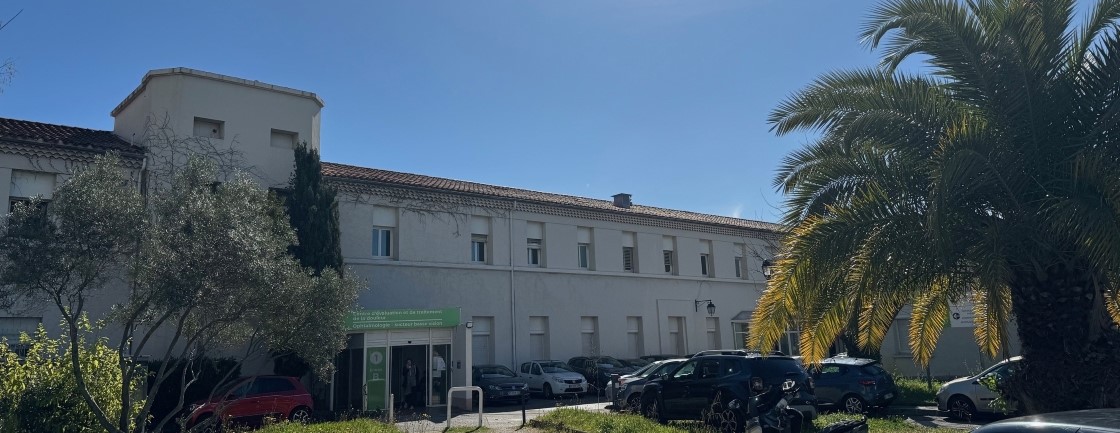
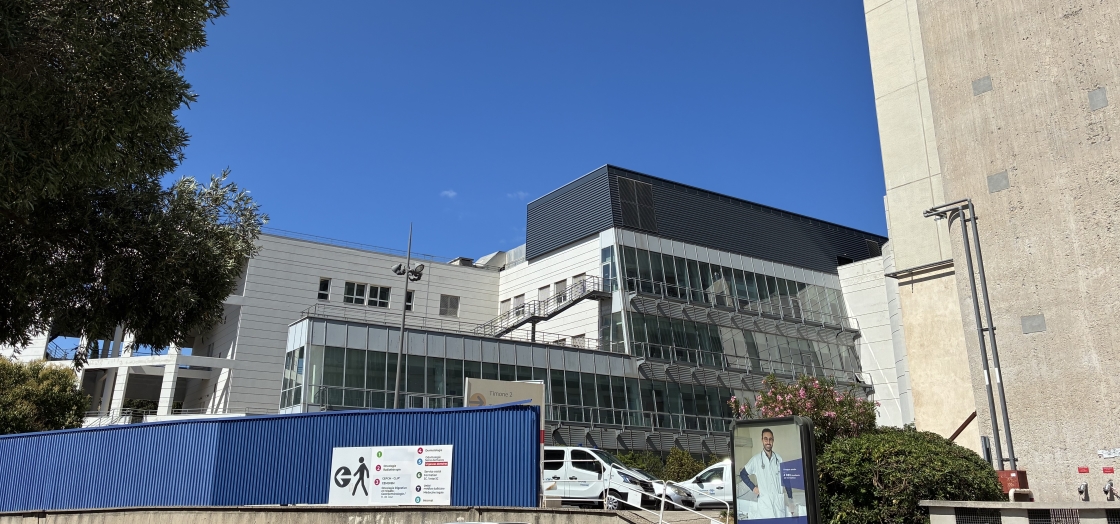
Among the winners of our Ecomaison x Ecominéro 2024 call for projects, discover the impressive modernization project of the Assistance Publique – Hôpitaux de Marseille (AP-HM). Before the construction of the new 49,000 m² Women, Parents and Children Building on the Timone site, two old buildings measuring 4,400 m² and 365 m² must be demolished.
This first stage serves as a learning ground: the project team is implementing an exemplary approach to reuse as many materials as possible, limit waste, and test new circular economy practices.
A hospital that is learning to stop throwing things away
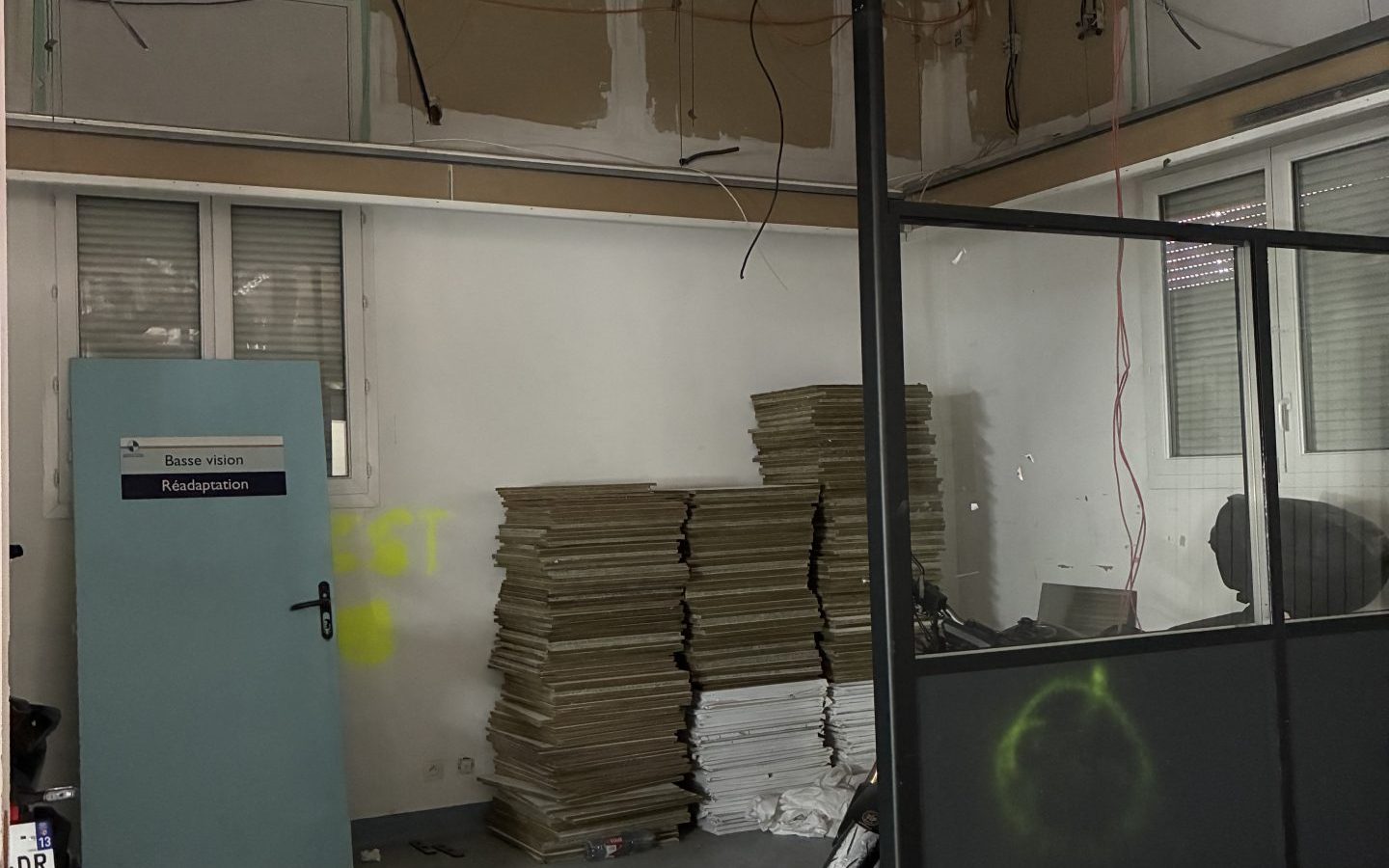
In Marseille's urban landscape, Building G of the AP-HM is gradually disappearing. Not abruptly: each element is dismantled, sorted, and evaluated. This meticulous deconstruction hides an ambition that goes far beyond simply dismantling old ophthalmology consultation rooms, among other things.
The hospital took advantage of this project to shake up its habits.
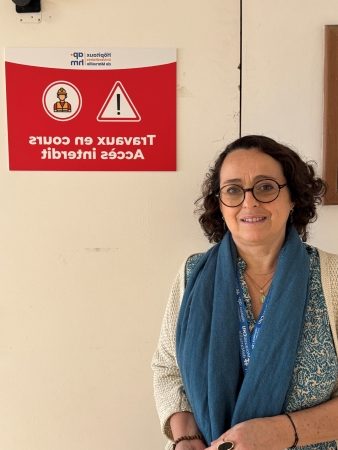
“We realized that we are constantly carrying out maintenance and refurbishment work, and that we could therefore adopt a more thoughtful, more virtuous approach in order to better reuse and recycle used products during these stages. But first, we need to change our practices.”
explains Agnès SANTUCCI GEA, Project Manager and Head of Operations, Works Department.
From waste to resource: instructions for use
To carry out its PEMD (Products, Equipment, Materials, and Waste) assessment, AP-HM called on AC Environnement, a circular economy project management support group, which, with the help of Neo Eco and Caprionis, their reuse consultant, will identify a long list of reusable products and materials (frames, false ceilings, doors, handrails, locks, hardware, sanitary facilities, stone, etc.). Their mission: to transform this project into a benchmark for reuse for the many projects planned over the next few years.
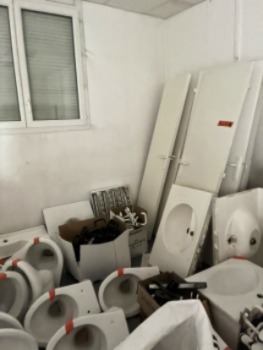
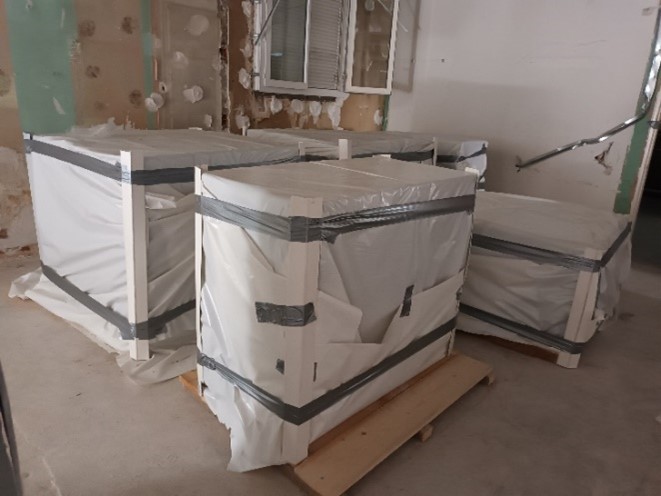
The strategy favors short supply chains. Technical services directly recover useful equipment (mainly air conditioning, doors, and false ceilings) for use in other buildings. The SAMU SMUR site, a poison control center under construction on the same plot and recognized with the Mediterranean Sustainable Building gold label, benefits from carefully removed sinks, toilets, mirrors, and doors. Other remaining materials are stored for future use on the site or offered to partners when they can be identified.
“There is real demand for reusable products in Marseille, but administrative and logistical constraints are slowing down their rollout. We are therefore delighted to see circular loops being created, particularly with one of our partners, the Régie Service 13 association, which has benefited from around fifteen sanitary facilities.”
Alix Deroubaix, Regional Development Manager for the Southeast at Ecomaison
What has already been reused
- 18 tons of stone in situ for reuse in infiltration swales
- Sanitary equipment (toilets, basins, sinks)
- Doors, false ceilings
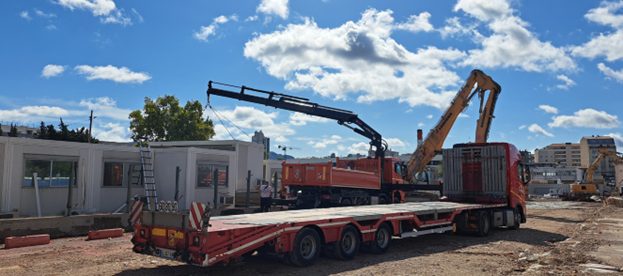
- Modular buildings ( 365 m² – 20 modules)
A revolution in practices
Beyond the tons diverted from the dumpster, this pilot project aims to bring about a lasting change in the teams' reflexes. Each PEMD diagnosis and each redevelopment decision becomes an opportunity to anticipate reuse rather than systematic replacement.
Space constraints in the city center do not hinder reflection. They refine it. Ultimately, this Women, Parents, and Children Building will be constructed on foundations that are as much architectural as they are methodological: those of a hospital that has learned to value what it already has.
From the reuse of atypical materials to the integration of professional inclusion, responsible project management, and much more, we invite you to discover other projects supported in 2024 that may inspire you for the 2026 session.