Our sectors
Furnishings, building products and materials, DIY and garden items, toys: the four Extended Producer Responsibility (EPR) channels for which Ecomaison is the state-approved eco-organization, are each governed by the French Anti-Waste for a Circular Economy(AGEC) law.
Whether they are more than 10 years old, like the Furniture sector , or more recent, all EPR sectors contribute to the success of a production and consumption model based on reuse, repair and recycling.

A new sector for a more virtuous industry!
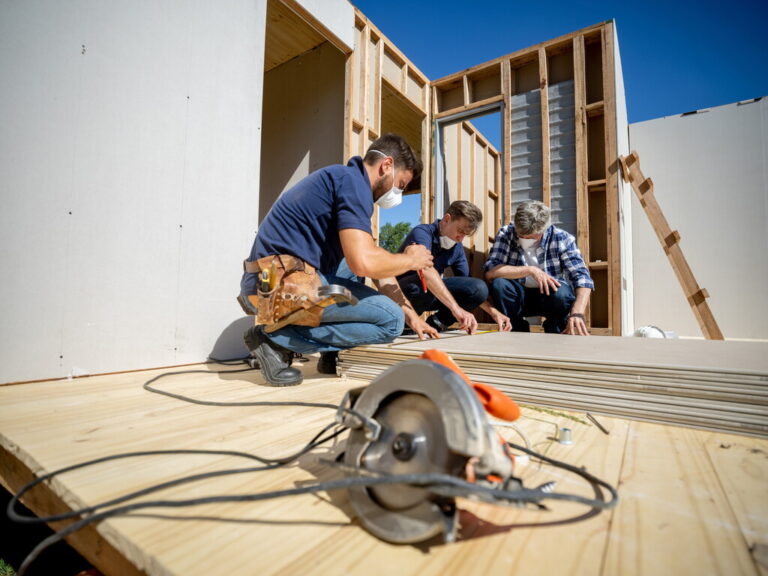
The Building Products and Materials (PMCB) family is one of the sectors subject to Extended Producer Responsibility, instituted by the French Anti-Waste for a Circular Economy Act (AGEC). It has been in force since January1, 2023. Ecomaison is approved for non-inert products and materials (wood, joinery, plaster, etc.).

We work with professionals to help them understand the building sector and its challenges, as well as to help them meet their regulatory obligations and play their part in the circular economy. Over the course of 2023, Ecomaison has pursued two major avenues of development for the fledgling sector:
- Bringing companies into line with the May 2023 application of an eco-participation scale modulated according to product recyclability,
- Equipment for DIY and trade outlets.
An extraordinary building industry
The building products and materials sector is unusual in many respects: more than 42 million tonnes of waste generated every year, hundreds of product and material references, a market of more than 380,000 companies, 365,000 of which are craft businesses, and a strong expectation on the part of craftsmen that collection points should be accessible free of charge (provided that the waste is sorted).
The building industry in figures
1 760
membership contracts to end 2024
148.000
tonnes of building products and materials collected
Which products are concerned?
These include products and materials, including wall, floor and ceiling coverings, which are intended to be incorporated, installed or assembled permanently in a building, or used for building-related improvements on the site, including those relating to vehicle parking, with the exception of products and materials used solely for the duration of a building site.
Category 1: inert materials
- Slate
- Concrete and mortar or contributing to their preparation
- Ceramics
- Lime
- Aggregate
- Bituminous mixtures or their preparation (excluding membranes)
- Limestone, granite, sandstone and lava stones
- Baked or unbaked clay
- Other products and materials of mineral origin
Category 2: non-inert materials
- Wood
- Glass wool, rock wool
- Materials of plant or animal origin
- Metal
- Bituminous membranes
- Joinery incorporating glass, glazed walls and related construction products
- Mortars, coatings, paints, varnishes, resins (only products not covered by the EPR scheme for specific waste)
- Plastics
- Plaster




Our eco-participation rates
Ecomaison's eco-participation rates are modulated according to the recyclability of products and materials, the sustainable management of resources and the durability of products.
One-stop shopping for 2 categories of products and materials
Ecomaison has a cross-cooperation agreement with the eco-organization Ecominéro, approved for category 1. As a result, Ecomaison and Ecominéro offer professionals the possibility of joining both categories, on their respective platforms, to take charge of all building materials.

"Providing a regulatory and operational response to both inert and non-inert categories is in line with our desire to offer members and their distributor customers, both craftsmen and private individuals, comprehensive and straightforward solutions."
Dominique Mignon, President of Ecomaison
What are the challenges facing the construction industry?
With the launch of this new sector, Ecomaison faces a number of challenges at the same time, such as the deployment of collection points, ensuring that companies comply with regulations, and the organization of waste processing....
To support distributors and retailers, Ecomaison is working on several projects:
- Deploying recovery sites
- Equipping stores with skips for specific materials
- The development of an adapted service offer for craftsmen: free access to collection points provided that waste is sorted beforehand, provision of skips on worksites, etc.
In parallel with its actions, to meet the objectives set by the accreditation specifications, Ecomaison is calling on the public authorities to rebalance collection targets by material and to smooth the deployment trajectory of the building sector. Progressivity is essential if the sector is to be economically sustainable for companies in the sector, and allow investment in industrial solutions for recycling this waste.
Ecomaison's mission
Ecomaison's mission is to deploy them:
- We organize the collection, sorting, repair, reuse and recycling of household objects and materials to give them a second life.
- We offer services and solutions for private individuals to find out what to do with used objects and materials, and for professionals to meet their regulatory obligations and act in favor of a more virtuous circular economy.
Focus on re-use
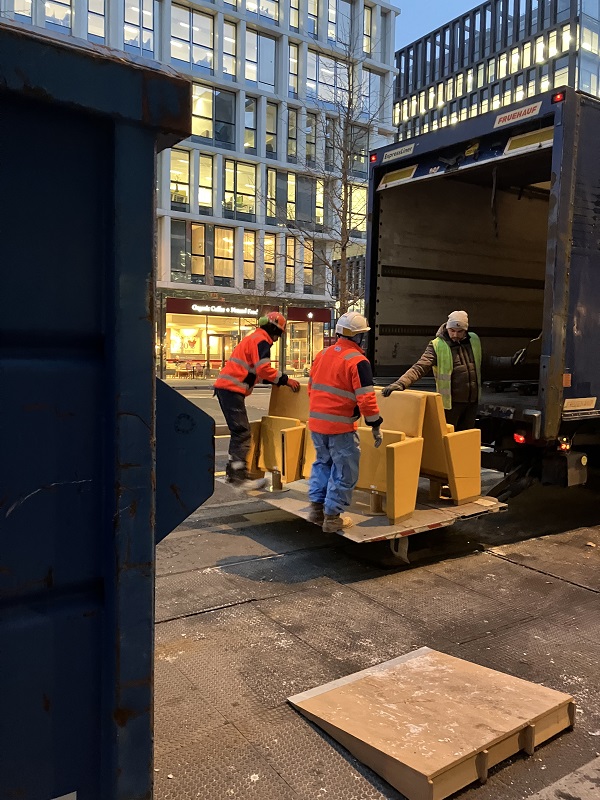
Ecomaison is conducting experiments on renovation sites, particularly former offices. The idea is to integrate the project from the outset and propose a recovery solution combining furniture and building materials, directing them towards reuse.
OCAB, the coordinating body for the building industry
In addition to Ecomaison, three other eco-organizations have been approved for the building sector. To coordinate their work and share out their obligations, a coordinating organization dedicated to the building sector, the OCAB, has been created. Its purpose is to offer a facilitating solution to :
- Local authorities, by offering them a one-stop shop for their contracts with eco-organizations;
- Building professionals, in particular by drawing up common, harmonized waste sorting instructions and providing a map of collection points;
- Individuals with building waste who can use the map to easily find a site to dispose of their waste.

Who's concerned?
A producer and/or marketer is any natural or legal person who, on a professional basis, manufactures, assembles, imports or places on the national market products or materials intended for the construction or renovation of a building or home.
Eco-participation funds the building industry
Producers and marketers pay an eco-participation fee to Ecomaison for each item placed on the market. This sum is used to organize the entire collection, sorting, reuse, repair and recycling circuit, in line with their regulatory obligations under the Extended Producer Responsibility scheme.

Further information
Publications
Find all the resources produced by Ecomaison to make it easier for you to use its services: schedules, rates, contracts, user guides, webinars...
Contact us
From Monday to Friday, 9am to 5pm, our advisors are on hand to answer all your questions: call them on 0811 69 68 70 (5 cts per call + price per call).