Our sectors
Furnishings, building products and materials, DIY and garden items, toys: the four Extended Producer Responsibility (EPR) channels for which Ecomaison is the state-approved eco-organization, are each governed by the French Anti-Waste for a Circular Economy(AGEC) law.
Whether they are more than 10 years old, like the Furniture sector , or more recent, all EPR sectors contribute to the success of a production and consumption model based on reuse, repair and recycling.

The Toy industry, a gas pedal for re-use and innovation
Toys are one of the sectors subject to Extended Producer Responsibility, instituted by the French Anti-Waste for a Circular Economy Act (AGEC). This law has been in force since 2022. Ecomaison is the only government-approved eco-organization for this sector.
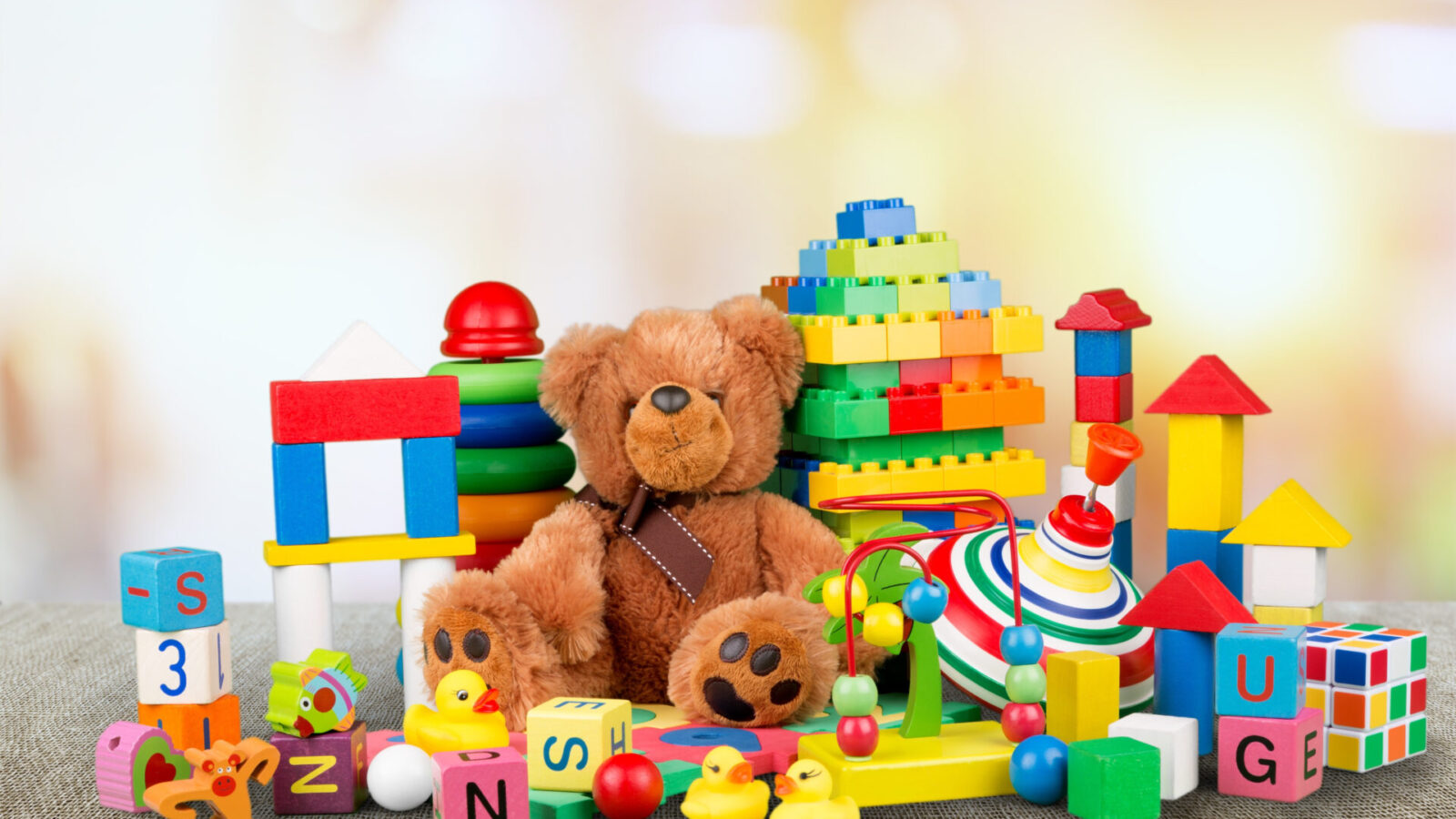
As soon as the law establishing the sector was published, toy manufacturers and retailers joined forces with Ecomaison to make it an exemplary sector, particularly in terms of re-use and innovation. This dynamic was underpinned by almost two years of upstream consultation with companies and trade federations, enabling a rapid, structured launch as soon as the sector was officially announced.
What is REP Jouets?
Extended Producer Responsibility (EPR) for toys is an extended responsibility scheme set up to meet the environmental challenges posed by the end-of-life of toys. Since 2022, toy producers, importers and distributors have been obliged to finance or organize the management of waste from the items they place on the market. This measure is part of the AGEC law, with the aim of promoting waste reduction, reuse, repair and recycling of used toys. By entrusting the implementation of this obligation to an approved organization like Ecomaison, the companies concerned are contributing to a more circular economy, by limiting the environmental impact of their products throughout their life cycle.
Eco-contribution: a lever of responsibility for toy producers
As part of the EPR program for toys, producers are obliged to pay an eco-contribution for each toy placed on the market. This amount is used to finance the collection, sorting, reuse and recycling of used toys. This is an essential mechanism in the EPR chain, which makes companies responsible for the environmental impact of their products. In practical terms, marketers can entrust this obligation to an approved organization such as Ecomaison, which takes care of the operational management of the sector, from setting up collection solutions to waste treatment. The eco-contribution varies according to a number of criteria, such as the materials used, the weight of the toy, or the ease of recycling, thus encouraging manufacturers to design more sustainable, eco-designed products.
Towards a second life for toys: reduction, reuse and recycling at the heart of EPR
The EPR toys sector aims to transform our consumption habits by giving a second life to unused items. Thanks to the mechanisms put in place by our model, used toys can now be collected, sorted and directed towards appropriate solutions:
- repair,
- reuse via solidarity structures,
- recycling of materials (plastic, metal, textiles, etc.),
- treatment and recovery (excluding recycling).
The aim is clear: to reduce the volume of waste landfilled or incinerated, while limiting the extraction of new resources. This circular model makes it possible to recover end-of-life products, prolong their use and limit their impact on the environment, while creating a more sustainable local economy based on solidarity.
EPR toys in figures for May 2025
+
1,6
millions
from tonnes collected in 2023
150.000
Tons of toys put on the market
6000
collection points (permanent and seasonal)
38 000
Tonsor 85 million toys handled by Ecomaison in 2024
1
toy on 2
collected by associations is channelled into re-use
Who are the players involved in Toys EPR?
A producer and/or marketer is any natural or legal person who, on a professional basis, either manufactures in France, or imports, or assembles or introduces for the first time, onto the national market, toys intended to be sold or given away free of charge to the end user by any sales technique whatsoever, or to be used directly on national territory.
Which products are covered by EPR Toys?
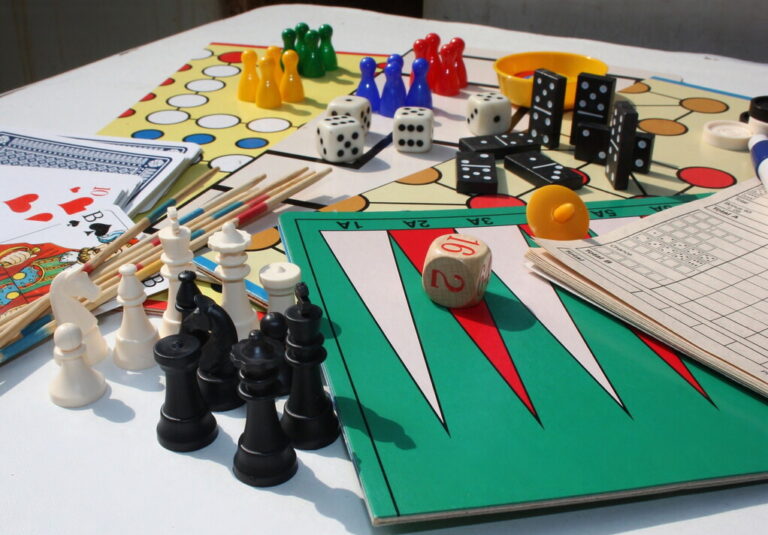
Toys, as defined inarticle 2 of decree no. 2010-166 of February 22, 2010 on toy safety, which refers in particular to "products designed to be used, exclusively or otherwise, for play purposes by children under the age of fourteen, or intended for this purpose", as well as models, puzzles and board games.
In practice, these include :
- Outdoor games,
- Indoor games (dolls, plush, construction, action games, etc.),
- Board games and puzzles,
- Toy gifts (defined as a toy distributed free of charge to the consumer as part of the sale of another product, such as a children's meal or a magazine).
Some products are not covered by the Toys sector!
Battery-operated toys, whether electric or electronic, which can cause fires in sorting centers, writing and drawing materials, sports and leisure articles, and pet toys.

Our eco-participation rates
Ecomaison's eco-participation rates are modulated according to the recyclability of products and materials, the sustainable management of resources and the durability of products.
A flying start!
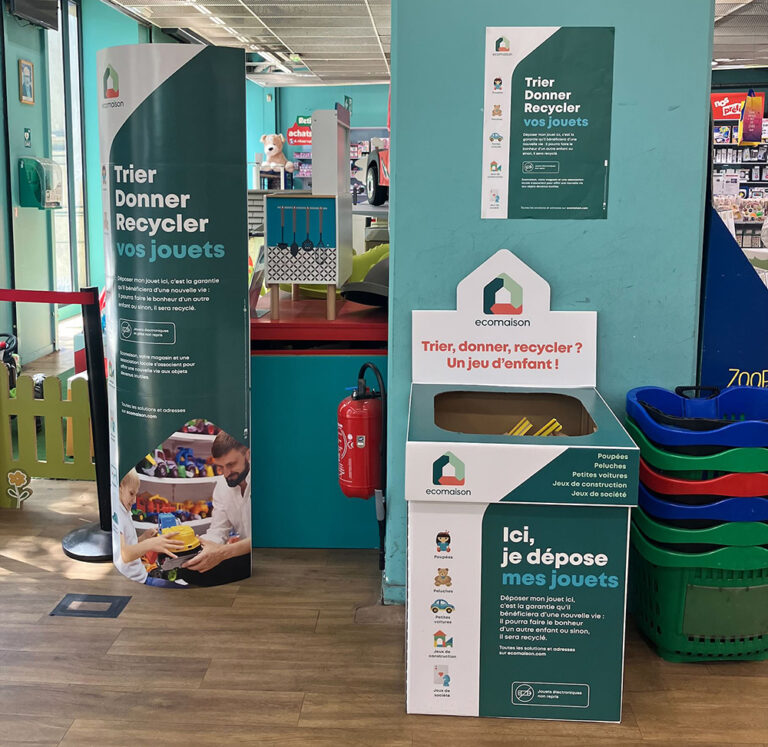
Launched in 2022, Ecomaison's aim was to equip as many collection points as possible with toy collection bins as quickly as possible. In just one year, over 1,500 public drop-off centers have been equipped.
The challenge was also to quickly get stores involved in the process of taking back used toys: 800 sales outlets - including specialist chains - were equipped with collection bins and signposting on sorting instructions.
At the same time, more than 360 agreements have been signed with associations and retailers to collect toys for recycling.
Toys, educational vehicles for solidarity donations and reuse
Right from the start, Ecomaison has organized a number of solidarity collection operations with a view to reuse. These are accompanied by educational initiatives focusing on donation, sorting and the second life of toys.
Ecomaison partners with :
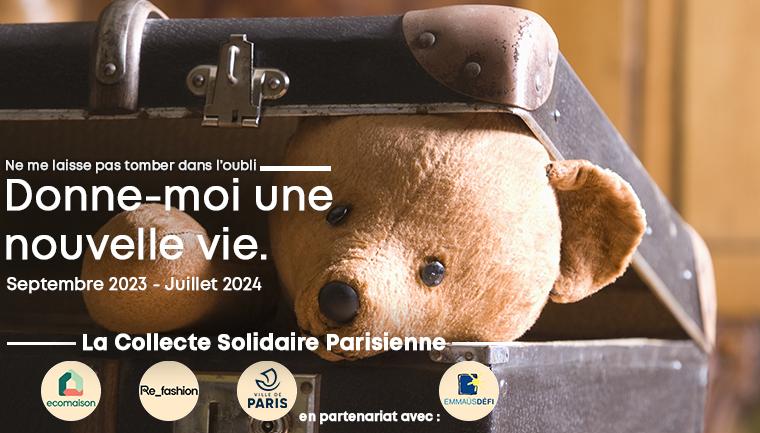
- Emmaüs Défi, Refashion and the City of Paris: installation of double toy and textile collection bins in Paris town halls.
- Académie de Versailles: collection in nearly 200 nursery and elementary schools. The operation began in 2022 and is repeated every year for 3 months, from November to January.
- Ecosystem: in 2023, over 43,000 kilos of toys were collected in just a few days at more than 670 collection points throughout France, as part of the "Let your heart speak" operation.
A specific fund to support toy reuse, benefiting players in the social and solidarity economy, was launched in 2023.
Each year, it must represent more than 5% of the contributions collected by Ecomaison to finance the sector.
How does toy collection and recycling work?
Toy recycling depends first and foremost on collection. Before the creation of the toys EPR chain, even recyclable toys usually ended up in incineration or landfill, due to a lack of organized and financed collection. This is where the sector plays a decisive role: it finally makes it possible to set up a specific collection system for toys at the end of their life cycle, enabling them to be sorted and recycled.
When we talk about recycling, we're talking about toys that can no longer be used or repaired. These toys are sorted by type of material - plastic, cardboard, wood, etc. - to enable these materials to be recycled and integrated into the manufacture of new products. - to enable these materials to be recycled and integrated into the manufacture of new products.
The commitment of our partner Smoby is in line with this logic, as it is not involved in collection or sorting, but acts downstream, reintegrating recycled plastic from the sector into the design of its toys. A concrete step towards a circular economy.
Eco-participation funds the toy industry
Producers and marketers pay an eco-participation fee to Ecomaison for each item placed on the market. This sum is used to organize the entire collection, sorting, reuse, repair and recycling circuit, in line with their regulatory obligations under the Extended Producer Responsibility scheme.
What happens to the toys we collect?
Once collected from dedicated drop-off points, used toys follow a structured processing path within the EPR chain. Some are re-used when they are still functional, thanks in particular to partnerships with players in the social economy. Others are sent to sorting centers, where they are separated according to their composition: plastic, wood, metal, fabric, etc. These materials are then directed towards appropriate recycling channels, enabling the manufacture of new products while reducing the sector's carbon footprint. Thanks to this approach, EPR toys actively contribute to responsible waste management, the preservation of natural resources and the establishment of a concrete circular economy in the field.
What are the benefits of EPR Toys?
The introduction of EPR for toys, steered by Ecomaison, is helping to structure a more sustainable industry by encouraging the reuse and second life of products. It helps to reduce the sector's ecological footprint by limiting waste and extending the life of toys. The barometer carried out with Circana reveals that almost one French person in two buys or resells second-hand toys, illustrating the development of a dynamic market. This approach also helps to change behavior by giving consumers the keys to a better understanding of the impact of their choices, and to move towards more virtuous practices.
Further information
Publications
Find all the resources produced by Ecomaison to make it easier for you to use its services: schedules, rates, contracts, user guides, webinars...
Contact us
From Monday to Friday, 9am to 5pm, our advisors are on hand to answer all your questions: call them on 0811 69 68 70 (5 cts per call + price per call).