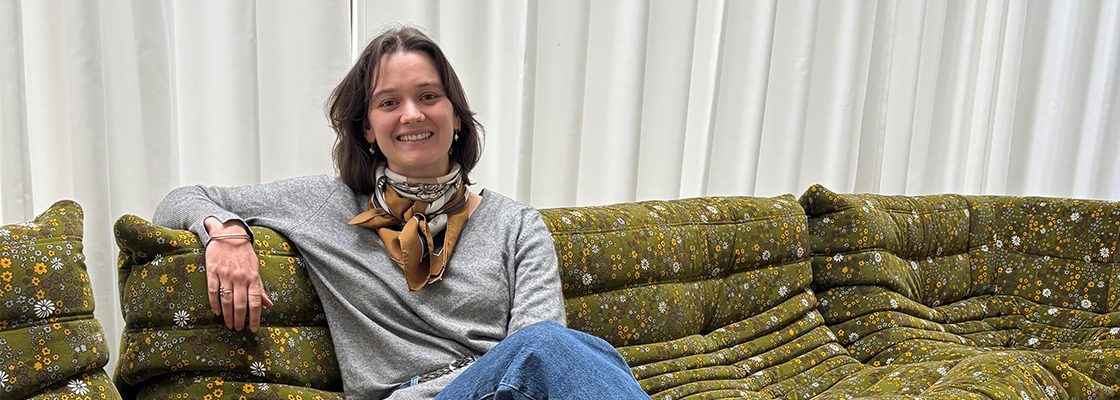
Interview with Alice Viault, CSR Manager at Ligne Roset. At Ligne Roset, circularity is rooted in a long-standing tradition: that of design built to last. In collaboration with Ecomaison and the furniture industry, the design house is structuring its eco-design approach and exploring new materials to integrate these issues at the heart of its development.
Ligne Roset is a member of Ecomaison and participates in the furniture EPR program. How does this collaboration fit into your overall strategy?
I joined Ligne Roset five years ago to take on the role of CSR Manager, a position created by the company to organize these initiatives.
Ligne Roset has a long-standing commitment to the industry. Antoine Roset, one of the company’s managing directors, is involved in the governance of Ecomaison, which naturally creates a close ties with the eco-organization.
With the enactment of the AGEC law and the new obligations related to extended producer responsibility (EPR), Ecomaison has played a key role in helping companies in the sector understand and implement these regulations.
Beyond this regulatory support, the partnership with Ecomaison is strong and dynamic. Working groups and business meetings bring together stakeholders directly involved in circular economy issues. These forums provide an opportunity to compare practices, share feedback, and make collective progress on topics that can sometimes be complex.
Eco-design is becoming a key focus in the furniture industry. How has this approach taken root at Ligne Roset?
The initiative took shape about a year and a half ago, with teams receiving training in life cycle analysis and the principles of eco-design. An initial project carried out with a designer and a client in the hospitality industry provided an opportunity to put this approach to the test in practice.
This experience served as a starting point for raising broader awareness within the company.
The initiative was then structured at the industry level, notably through the eco-design plan proposed by Ecomaison, which helped establish a clearer framework and more specific objectives.
Beyond regulatory support, the partnership with Ecomaison is rich and dynamic. Working groups and business meetings bring together stakeholders directly involved in circular economy issues.
What role did this eco-design plan play for you?
Companies in the sector must establish eco-design initiatives and goals. Ligne Roset has chosen to adopt the joint plan proposed by Ecomaison.
- This framework provides clear indicators and has helped structure the process.
- The exercise also revealed that many practices were already in place. Ligne Roset has been designing sustainable products for a long time, and certain approaches were already being used, even if they were not always formalized.
Today, this plan is primarily used to better measure and track progress.
Materials are also at the heart of the industry’s transformation. How are you addressing these issues?
Several avenues are being explored. In particular, the company has worked with its supplier to reduce the environmental impact of the foam used in its sofas. This initiative now helps prevent approximately 400 tons of carbon emissions per year.
Ligne Roset is also exploring new materials, such as certain recycled or bio-based materials.
Visit Innovation Days is a flagship event for to help people discover new and innovative materials. I’m thinking in particular of the company Malakio whose collaboration led to the creation of a coffee table that showcases Istrenn, a new rigid, attractive, and sustainable composite made from recycled seashells: Illustrations by Guillaume Delvigne. These events also serve as a monitoring tool: the innovations identified are then shared with the design teams to inform their thinking.
How do you see circularity evolving in the furniture industry?
Eco-design is set to become essential, particularly with the advent of environmental labeling.
Manufacturers will need to better manage the environmental impact of their products: life cycle analysis, choice of materials, repairability, and lifespan.
But this trend could also lead to a rediscovery of simpler principles: sustainable materials, modular designs, and objects built to last.
At Ligne Roset, this transformation is part of a broader strategy focused on decarbonization and eco-design for new collections, as well as the gradual evolution of certain iconic products. For the brand, the goal is clear: to design pieces that stand the test of time, while gradually incorporating the industry’s new circularity requirements.
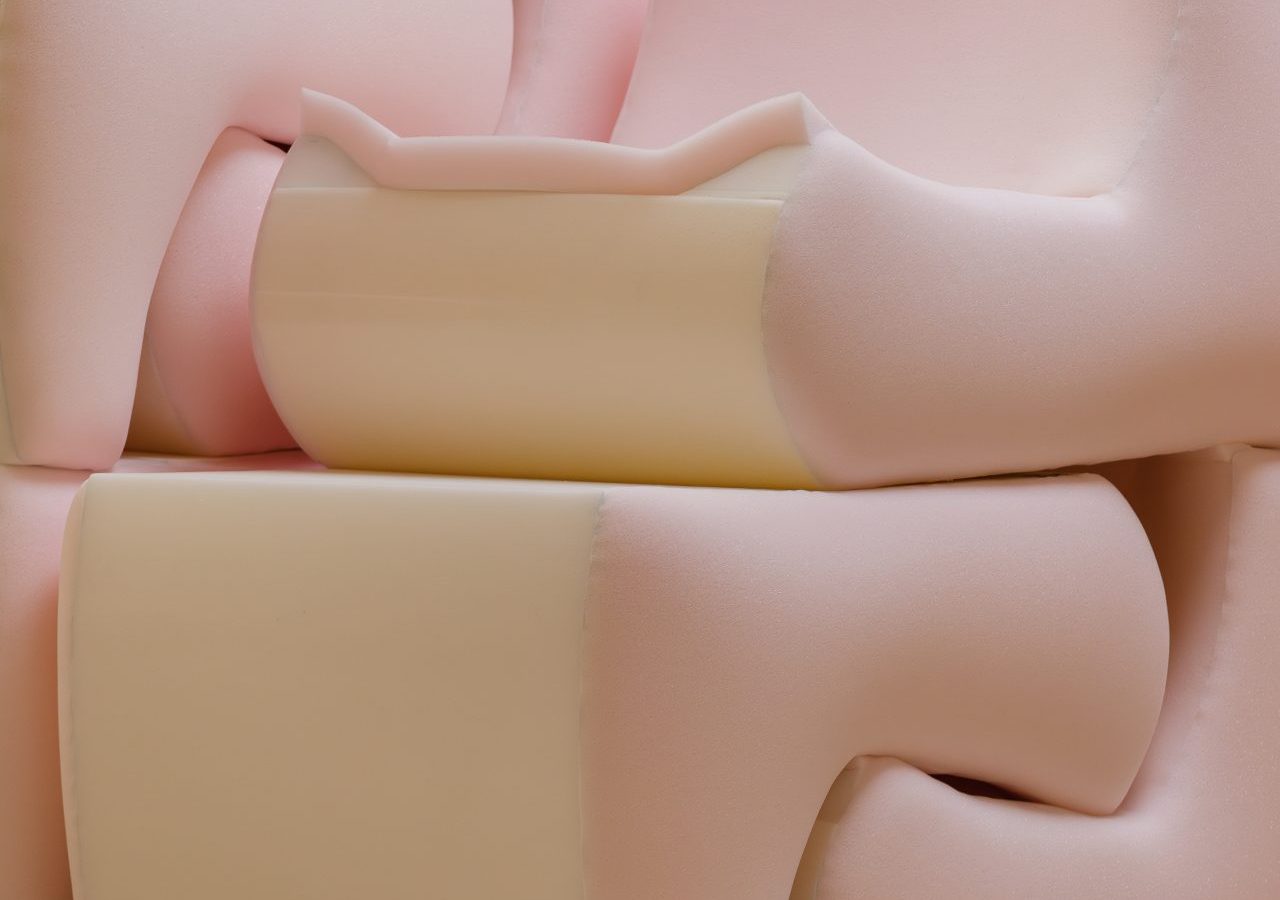
Foam assembly for the iconic Togo. Ligne Roset has worked with its supplier to reduce the environmental impact of these foams.
Incorporating recycled materials with Ecomaison
Thanks to a high-performance operational chain, we guarantee privileged access to high-quality recycled materials. We help our members to optimize their sourcing strategy and to add value to these resources through eco-modulations.