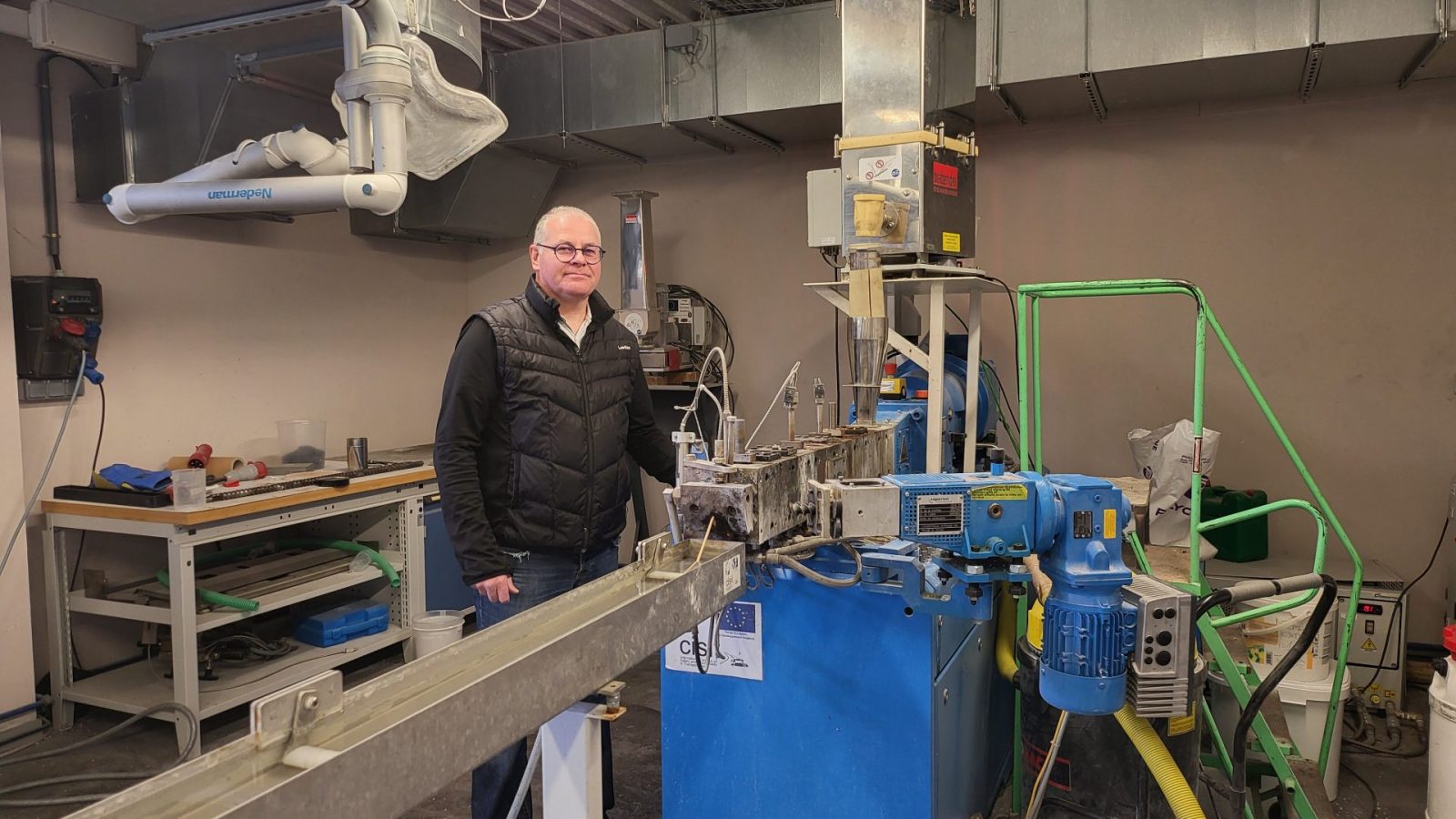
Selected in the 2025 Plastics and Foams call for projects and a partner of Ecomaison, Geneomat is developing a promising new material made from recycled latex foam. An overview of this innovative project with Thierry Grossetête, founder and CEO of Geneomat.
Thierry, what is Geneomat?
Geneomat is an R&D and innovation consulting firm committed to the ecological transition. We seek to identify new ways to repurpose materials and create new recycling streams through concrete and economically viable solutions.
We have been conducting our own research for a long time, particularly on recycled thermoplastic/rubber alloys. In particular, we have done a great deal of work on tire recycling. It was only natural for us to turn our attention to recycling the latex foam generated from the dismantling of mattresses collected and processed by Ecomaison.
What does your project involve?
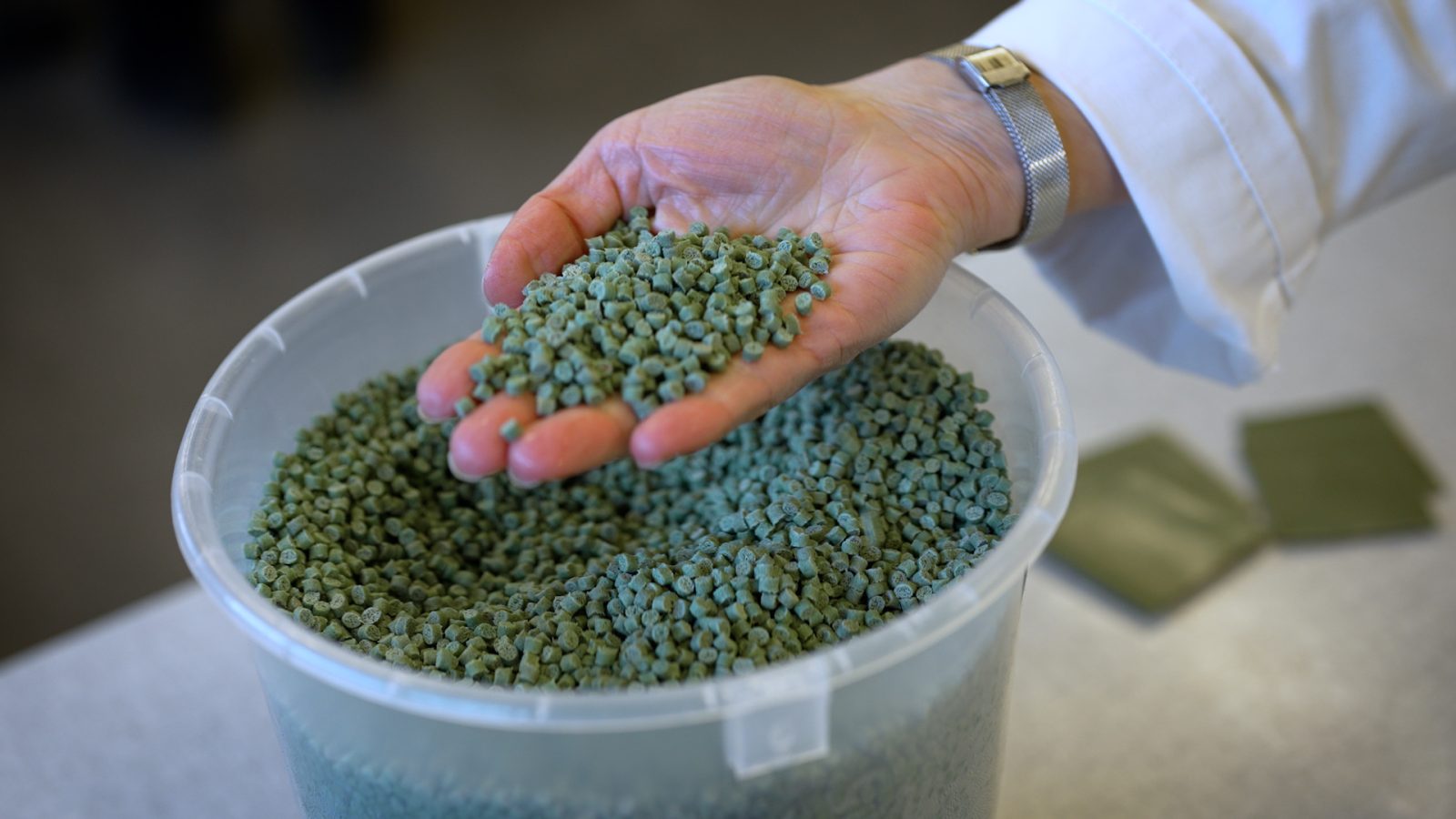
The goal is to develop new materials that incorporate as much of this recycled latex as possible (20 to 50%), combined with polyolefins (polypropylene or polyethylene). These polyolefins are derived from plastic items—such as toys—that are also part of the used products collected by Ecomaison.
We therefore use 100% Ecomaison raw materials! The ultimate goal is to produce ready-to-use compounds for the plastics industry.
Using hot-forming techniques—such as injection molding, extrusion, and rotational molding—plastics processors can then use these compounds to manufacture finished products. The key challenge is to develop the right formulation for these compounds that meets the needs of processing customers.
What are the potential applications?
Fenders, wheel arches, bumpers, automotive engine parts, profiles, piping, protective sleeves, building seals, as well as signage, outdoor furniture, and shock-absorbing flooring—the potential applications are endless!
We specifically target applications that require good shock absorption.
What mechanical properties are you looking for in this material?
- Impact resistance, elasticity, shock absorption, flexibility…These are the qualities sought by many manufacturers across a wide range of industries, and these are the benefits that latex offers.
- For more rigid components, we also focus on the long-term durability of the materials. Pipes intended to be buried underground, for example, must be able to withstand climatic variations.
- Finally, we must ensure UV stability to enable outdoor use without surface degradation, discoloration, or cracking, which could eventually lead to a deterioration of mechanical properties.
What are the main technical challenges you face?
The challenge is twofold:
- incorporate a significant amount of recycled latex
- and optimize formulations to ensure the homogeneity and stability of the mixtures, depending on the different matrices under consideration.
This homogeneity and stability will ensure reproducibility, enable the compounds to be used under optimal conditions, and guarantee that the finished products will have consistent mechanical properties. Since variations in the batches of latex received can affect surface appearance and, above all, color, we must also focus on the preparation of the material—particularly its grinding—and identify the right additives… UV stabilization is another major challenge: it is a weakness that was revealed during the initial formulation tests.
Where are you at today?
Ecomaison’s financial support and guidance will cover two phases: an industrial R&D phase (2025–2027), followed by an industrial operational phase (2028–2032).
We have begun conducting trials under semi-industrial conditions using an extrusion line at IMT Nord Europe in Douai. This will enable us to accelerate the industrialization and commercialization phases with the compounders we have already identified. Once the formulations are finalized, we will also need to develop technical data sheets for the compounds and safety data sheets tailored to the target products and market. We will also conduct a life cycle assessment (LCA) of the products to ensure they meet expectations regarding the ecological transition.
How do you work with Ecomaison?
Ecomaison is fully attentive to our needs. We engage in frequent discussions, particularly regarding the classification and pre-treatment of material streams, to find solutions that further improve the fineness of the latex foams and minimize any impurities they may contain. Working with Ecomaison guarantees access to consistent, high-quality sources of secondary raw materials for recycling. This will be essential during the industrialization phase.
“To minimize the risk of foam from used mattresses being used for energy recovery, it is essential to develop industrial applications in the short term. Geneomat’s project will enable the diversification of applications for recycled latex materials into the furniture, construction, and automotive industries. Geneomat is the only company working with so-called ‘thermoplastic elastomer’" (TPE), for a product made from 100% recycled materials. A partner of choice!”
Laure Bisson, Head of the Materials and Substances Innovation Division
Incorporating recycled materials with Ecomaison
Thanks to a high-performance operational chain, we guarantee privileged access to high-quality recycled materials. We help our members to optimize their sourcing strategy and to add value to these resources through eco-modulations.