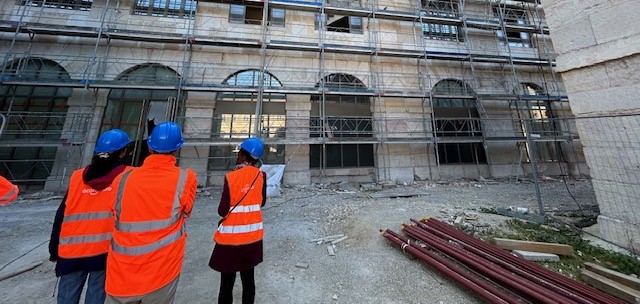
In 2024, our joint Ecomaison x Ecominéro call for projects supported 36 exemplary building sites for reuse in the construction industry. Zoom in on one of the 2024 winners, the Bourgogne-Franche-Comté rectorat.
In the heart of Besançon's historic center, an emblematic 1840 building is being transformed into a modern university campus. With 396 tonnes of materials reused out of the 569 tonnes of waste generated, this state-owned building site is setting new standards in terms of the circular economy.
A worksite that pushes the limits of re-use
Imagine a 100-meter-long military-style building nestled in Besançon's listed urban center. Since 2022, this historic building has been the subject of an exceptional restoration project, due for completion in early 2026. The aim? To create a new, bright and modern university building, while at the same time becoming a veritable demonstrator of the circular economy.
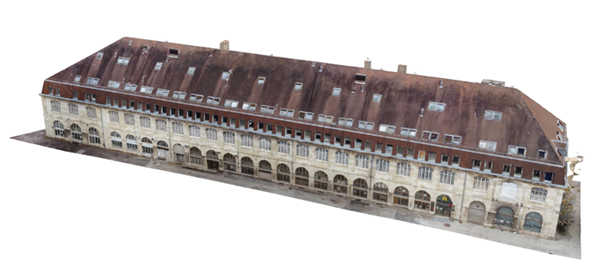
With 8,000 m² of floor space to be renovated, the project is impressive in its environmental ambitions. Of the 569 tonnes of waste generated by the site, 396 tonnes are destined for re-use, a rate of 70%! A remarkable performance that far exceeds current industry standards.
"We wanted to integrate reuse into this project to reduce the carbon footprint of our worksites, both in the short term, during the construction phase, and in the long term, with modular, transformable and upgradeable projects. We succeeded beyond our expectations! "says Sylvain DOUSSE, design engineer and project leader.
From military to academic: an in-depth transformation
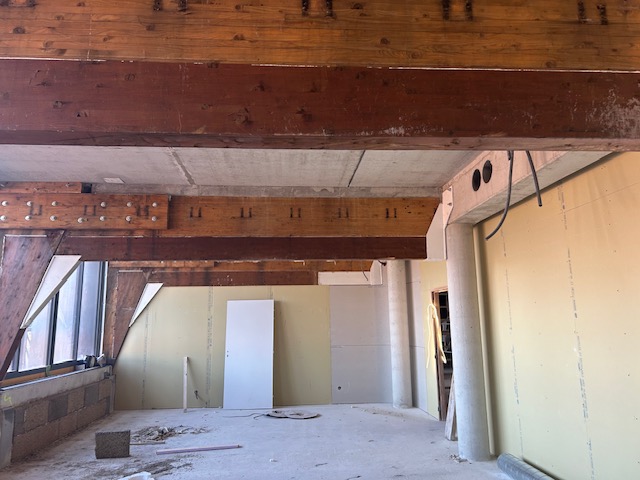
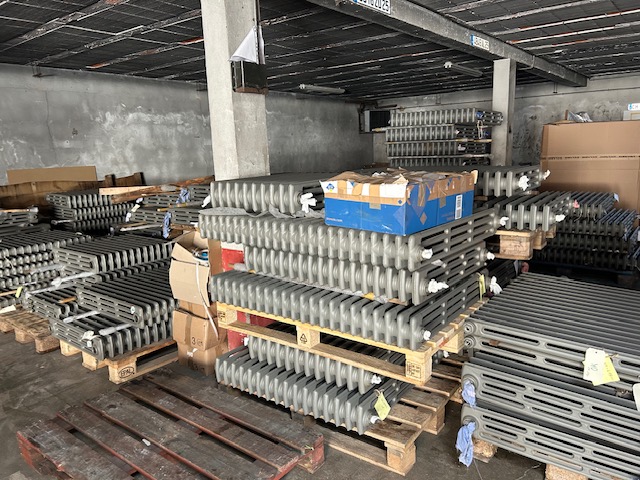
The building, built in 1840 with stone walls and modernized in the 1970s with a glulam frame, requires a meticulous approach. Each element is the object of particular attention: frameworks are removed by crane, light fittings are tested and fitted with LEDs, radiators are cleaned and their joints replaced.
All the materials deposited find a second life thanks to a partnership with the TRI association in Quingey. A solidarity-based approach that helps finance work-integration projects.


Innovation for the circular economy
In addition to traditional reuse, the project goes a step further, with a prototyping phase for furniture designed using materials from the site. This creative approach transforms constraints into opportunities for innovation, demonstrating that the circular economy can rhyme with creativity and modernity.
Materials are stored directly on site, in a specially adapted annex building. This proximity facilitates packaging and compliance operations, reducing the site's carbon footprint.

Challenges successfully met
Like all pioneering projects, the project encountered obstacles: lead and asbestos pollution, a lack of initial experience on the part of design offices and contractors, and sometimes difficult storage conditions. But these difficulties were transformed into valuable lessons for the industry.
The project's strengths more than compensate for these challenges: the involvement of work-integration companies, the persuasive support of a government worksite, the inclusion of additional environmental services in contracts, and exemplary communication that inspires other projects.
"This project illustrates that a large-scale project can effectively integrate reuse, even in the context of a major refurbishment involving significant structural changes. The project stands out for its strong local roots, promoting a local circular economy: reused and new materials from the Franche-Comtois region, local companies and reuse players were mobilized exclusively in the region. "emphasizes Dorian Raynaud, Ecomaison's regional development manager for the Grand Est region.

A model for the future
This project demonstrates that it is possible to reconcile historical heritage, university modernity and environmental ambition. By saving 400 tonnes of materials compared with a traditional renovation, the project is paving the way for more environmentally-friendly worksites.
Supported by funding from the stimulus plan and the environmental transition, this project also benefits from a strong local dynamic with involved resourceries and mobilized players. A fine illustration that reuse is no longer a utopian dream, but a tangible economic and ecological reality.
The Rectorat de Besançon proves that, with the right ambition, methods and support, every worksite can become a link in the circular economy. A message of hope for all building professionals wishing to embark on this path to the future!
Turn your worksites into circular economy demonstrators! Find out how Ecomaison can help you with your reuse and recycling projects.
Read also