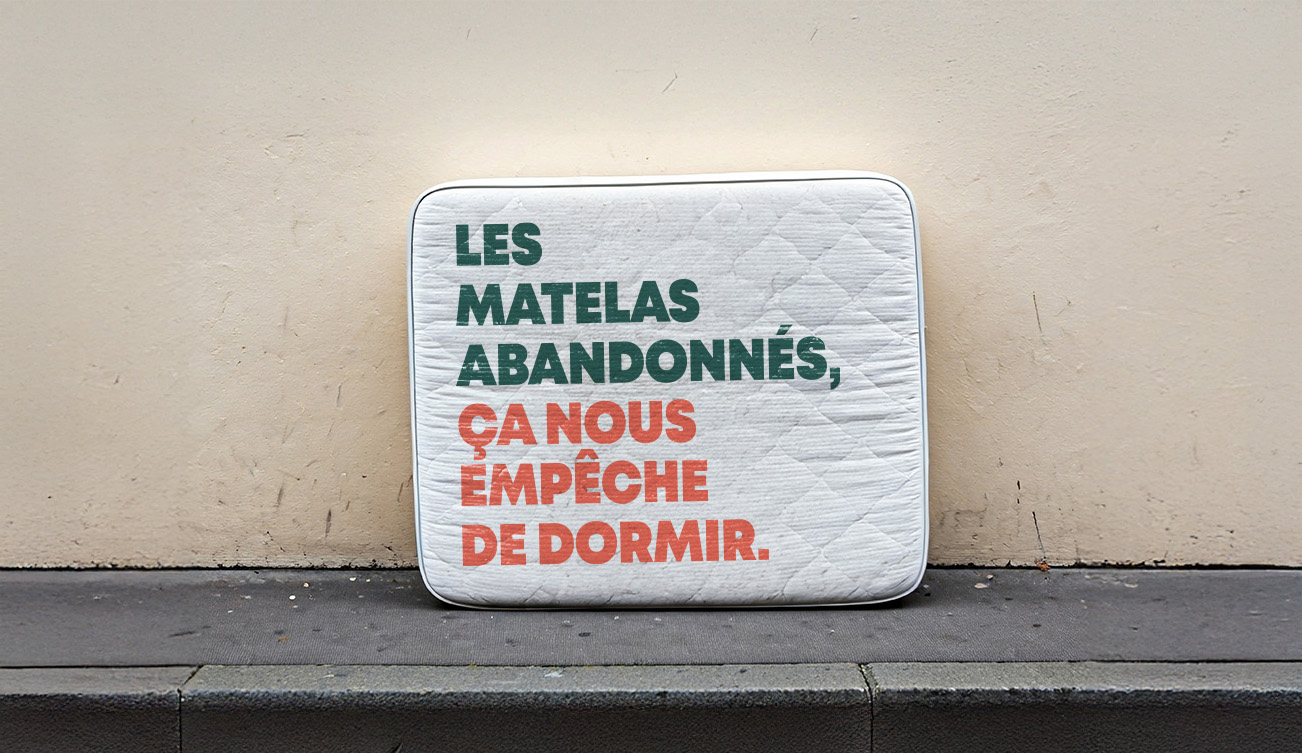
Your old mattress deserves better than to end up in the street. Damaged by the elements, it's difficult to recycle. But today there are simple, practical solutions to give it a second life.
What's the best? Take-back: when you buy a new mattress, the store is obliged to take back the old one, for example, on delivery. It's a legal obligation, but also a gesture for the environment: taking back your old mattress helps avoid illegal dumping, facilitates sorting and gives it a real chance to be reused or recycled.
And in city centers? In Paris, Ecomaison and the city council are experimenting with mattress collection at the foot of buildings.
All the solutions you need to give your mattress a second life.
Ecomaison, concrete solutions near you
With a collection point less than 15 km from your home, Ecomaison offers practical collection solutions to help you do the right thing, in the right place. Free take-back in store or on delivery, donation to a partner association, drop-off at a waste collection center... there's always a solution adapted to your situation.
Preserving the environment: Paris sets an example
Ecomaison and the City of Paris have formed a partnership to experiment with an innovative, environmentally-friendly mattress collection system. The aim? To give every discarded mattress a useful second life, through reuse or recycling.
This operation is part of the City of Paris' drive to increase the re-use of bulky items collected. It also aims to contribute to the cleanliness of public spaces by preventing illegal dumping. Launched on June 23 in the1st,2nd,3rd and4th arrondissements of the capital, it is due to be extended to the5th and 6th arrondissements in the autumn, and will run until at least December 31, 2025. Mattresses and box springs are collected by Ecomaison.
Preserving the quality of mattresses during collection
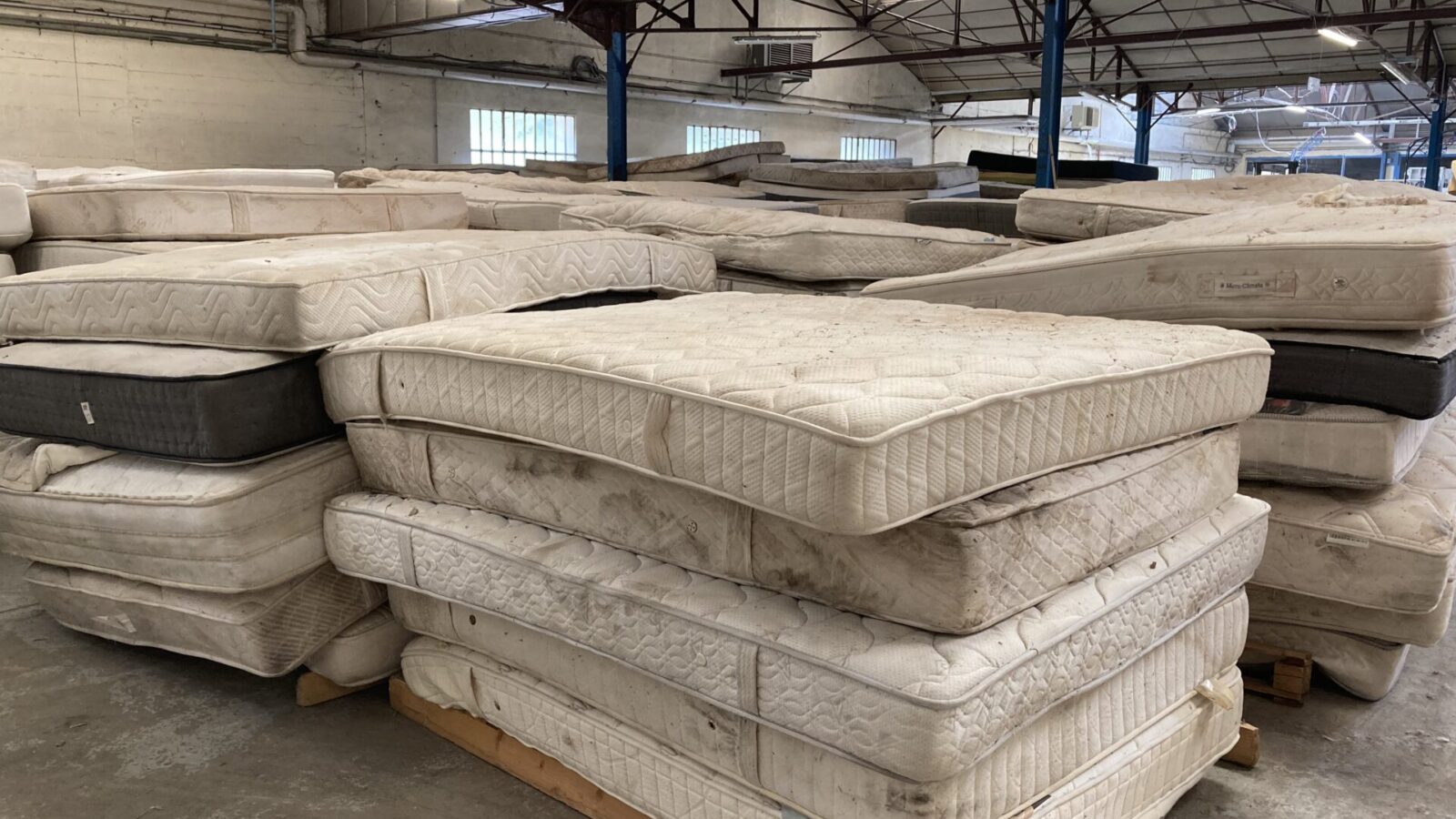
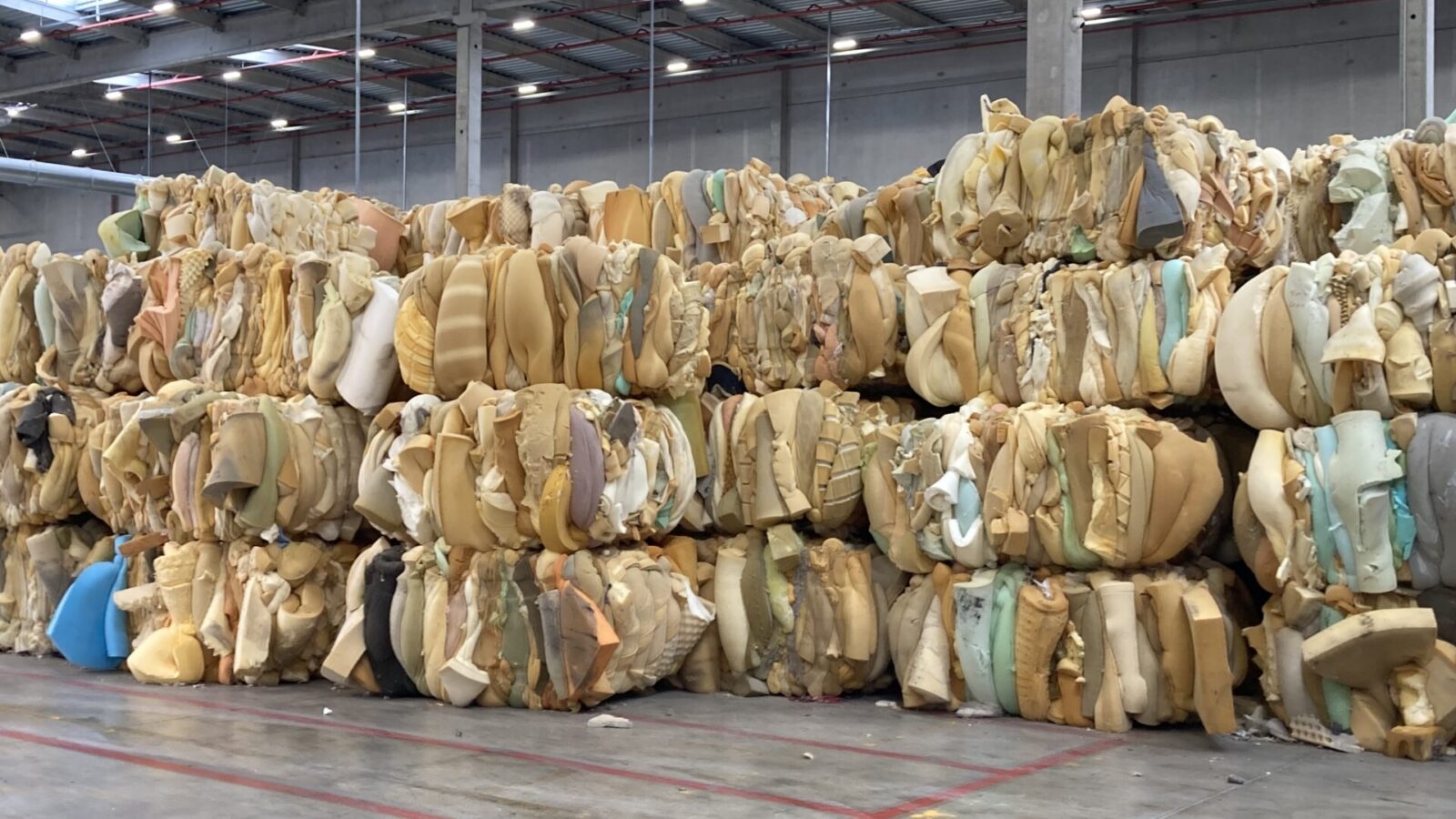
The aim of this new system is to get the mattresses out of the way as quickly as possible, without mixing them with other bulky items that could impair their quality and thus compromise their re-use. Once collected from the bottom of buildings, mattresses are grouped together in a closed skip located on the Ecomaison de Bercy platform. When the skip is full, they are delivered to a preparation center in Gargenville, where they are sorted. Mattresses in good condition are sent to Ecomatelas, where they are reconditioned for re-use. The others are dismantled and recycled by material.
The aim, of course, is to give priority to the reuse and reconditioning sector!
"In 2012, 100% of used mattresses were landfilled. Thanks to the deployment of Ecomaison's recycling chain, today it's less than 4%. With this experiment, we want to go even further, and guarantee the quality of collected mattresses throughout their journey, to give them a better chance of being reused."
Kimberley Marks, Regional Manager for Normandy and the Paris Basin
Key figures
Over the first two months of the experiment :
- 61 collection rounds were carried out
- 279 successful removal requests
- 318 items of bedding were collected, representing 3 tonnes of mattresses and 3 tonnes of box springs
- 50% of the mattresses collected were sent to Ecomatelas for re-use, and 50% were dismantled for recycling.
Ecomaison organizes mattress and box spring collection rounds every day from Monday to Saturday.
To get rid of your bedding:
- log on to the City of Paris' online bulky goods removal service
- choose your collection slot
- On the big day, leave your belongings at the bottom of your building. If possible, bag them to protect them from the elements: the bag in which your mattress was sold, a recyclable plastic tarpaulin...
Also note :
- cancel your request if you change your mind. One out of every two removal requests is unsuccessful: either the item has not been deposited, or it has disappeared.
- respect the deadline and drop off your items just before the agreed time: the longer they remain on the sidewalk, the greater the risk of damage, which can compromise their reuse and recycling. They can also disappear;
Read also