Entrepreneur, author, and speaker Luc Teerlinck conceived and led a three-year project calledWe Play Circularat Decathlon in 2019. This unprecedented experiment aimed to develop the functional economy, which he presented at the second edition of Ecomaison's Circular Strategy Club on November 13. This inspiring initiative, which sparked the interest of participants, represents a true cultural revolution. The result is a change in model that could prove beneficial for everyone.
What led you to develop theWe Play Circularproject at Decathlon?
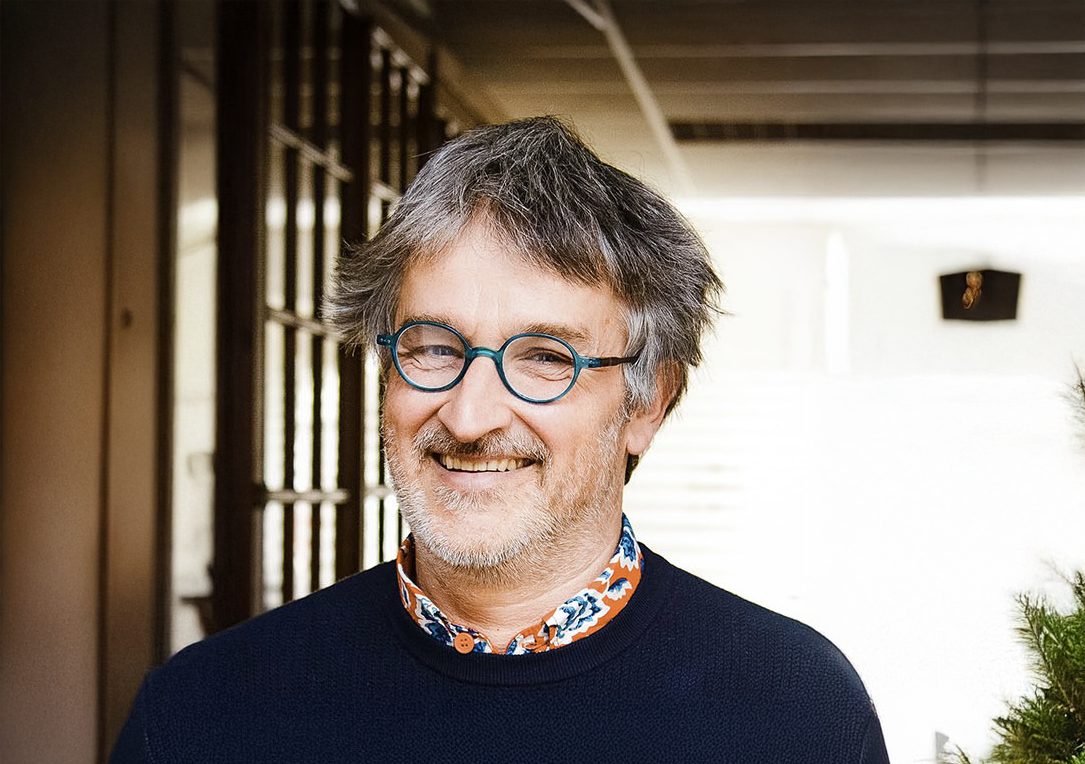
Luc Teerlinck: After setting up several companies, I joined Decathlon with the aim of innovating and testing new business models. I met many people and on one of these occasions, I had a kind of revelation: by offering customers the opportunity to use products rather than buy them and become owners, we could potentially enter into very virtuous models for all stakeholders. Why? Because the more we design, produce, and make available the highest quality and most durable products, the longer we can offer them on increasingly longer terms. So profitability per product compared to a sale could increase. It would then be possible to share these profitability gains with customers by lowering prices and/or adding service and experience to the offer. But also with the upstream chain to encourage manufacturers to develop increasingly high-quality and sustainable products. This would lead to a potential 180° paradigm shift: unlike the traditional linear model, quality here becomes a lever for cost reduction for the customer and ecological and social progress for all. This approach has a name: the functional economy.
Is that what you proposed doing at Decathlon?
Yes, I suggested implementing it in an exploration project via a monthly subscription giving access to the entire Decathlon catalog. The results are very encouraging. In terms of achievable performance levels, the offer is 3 to 6 times cheaper than purchasing for customers who need to regularly renew their equipment (growing children, people who are sensitive to fashion and collecting trends, etc.). As for profitability, it could reach 25% to 48%. At the same time, the environmental impact could be reduced by a factor of 15 to 32, making the model a winner for all stakeholders.
How did the audience at the Circular Strategy Club react to the presentation of your project?
I sensed keen interest from participants who were already committed to environmental issues. The lessons learned from Decathlon's experience appear promising, partly thanks to the correlation between reducing environmental impact and increasing economic performance. This promise led some participants to consider launching proof of concept** initiatives in their own sectors. However, I was keen to mention the existing obstacles, particularly in terms of governance, even though the main challenge remains cultural: the transition from ownership to usage—a veritable cultural revolution—is limited by a strong attachment to possession.
How could these obstacles be removed?
We need to make offers more appealing by combining economic benefits with an enhanced user experience. That's why I emphasized the formula implemented at Decathlon: subscriptions giving access to all equipment, combined with personalized services and tailor-made experiences. This approach paves the way for a new value proposition that is more rational, more attractive, and more experiential. The project's progress report also caught the attention of participants and could inspire new vocations. We have relaunched it with the ambition of creating a "Spotify for sports," i.e., a multi-brand subscription in addition to Decathlon. Ultimately, this approach could be extended to other sectors, integrating premium brands to maximize the model's performance.
What advice would you give to organizations wishing to test the functional economy?
When I left Decathlon, I simplified the model so that it could be replicated in other industries, provided that four criteria were met: selling products that are not too cheap; products that do not depreciate too quickly (i.e., no consumables); products that are not too personalized (i.e., without overly visible logos); targeting customers, some of whom want or need to replace their equipment at least once a year initially (and up to four years in the longer term). With one imperative: give priority to second-hand products.
Could you give examples of areas where this approach would be appropriate?
For example, areas such as toys, decoration, garden tools, and furniture seem particularly relevant, due to the frequent renewal of uses. Imagine regularly taking your children to choose toys according to their age, thanks to a subscription. Or changing the decoration of your home every year. My advice would be to provide a comprehensive offering, even if it means adapting it later. Ultimately, it's a matter of trial and error. Be open-minded and keep as broad a perspective as possible. A player such as Ecomaison, which is in contact with many companies, could play a key role in coordinating and supporting this type of offering. As a specialist in the circular economy, this eco-organization also represents a real guarantee.
What do you think of Ecomaison's Circular Strategy Club format as a space for cross-sector dialogue?
I think very highly of it! I am deeply and wholeheartedly convinced of the opportunities offered by the functional and cooperative economy. This type of initiative promotes the creation of tangible bridges between stakeholders and opportunities.
Quote The club promotes the creation of tangible bridges between stakeholders and opportunities.
In short: how can the principles of the functional economy be applied?
- Avoid overly personalized products
- Exclude products with a unit price that is too low
- Targetcustomerswho need to replace their equipment regularly
- Give preference to second-hand products
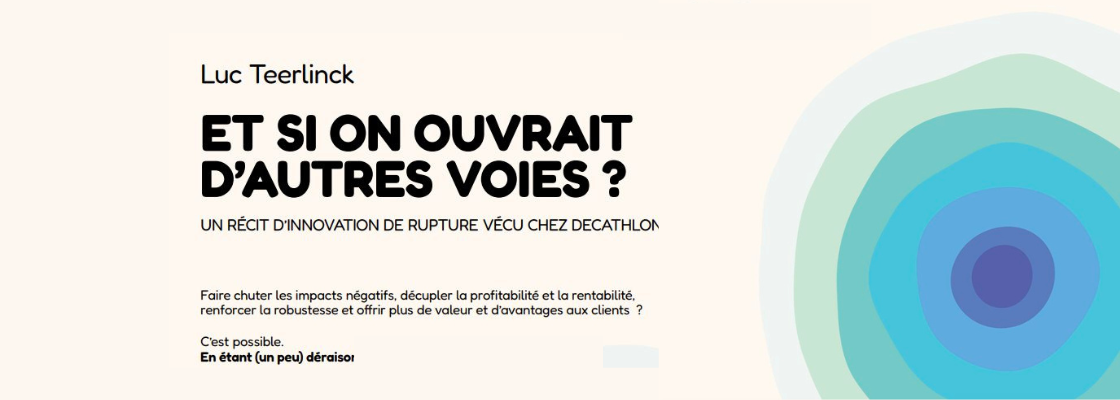
* "What if we opened up new avenues? A story of disruptive innovation at Decathlon" Luc Teerlinck. 2025
To download it, go to: https://lucteerlinck.com/
** proof of concept (POC): concept preview / feasibility demonstration
*** test and learn: test and learn