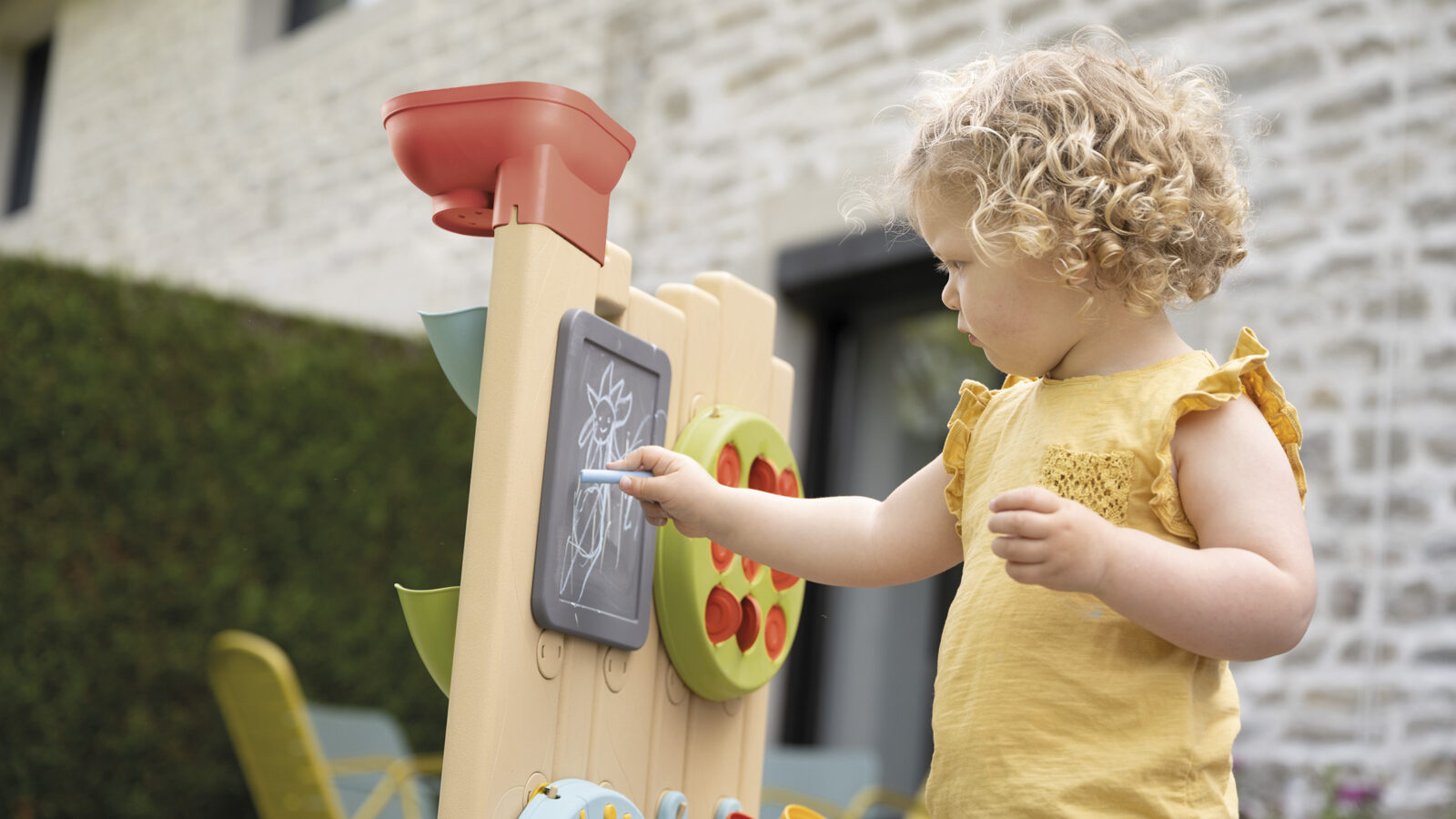
Being an eco-organization for the toy industry means speaking up for the sector and working together for a circular economy. It also means guiding producers along the path to eco-responsibility. Since 2020, Smoby, France's leading toy manufacturer, has been an Ecomaison partner.
Greener toys: Smoby takes up the challenge
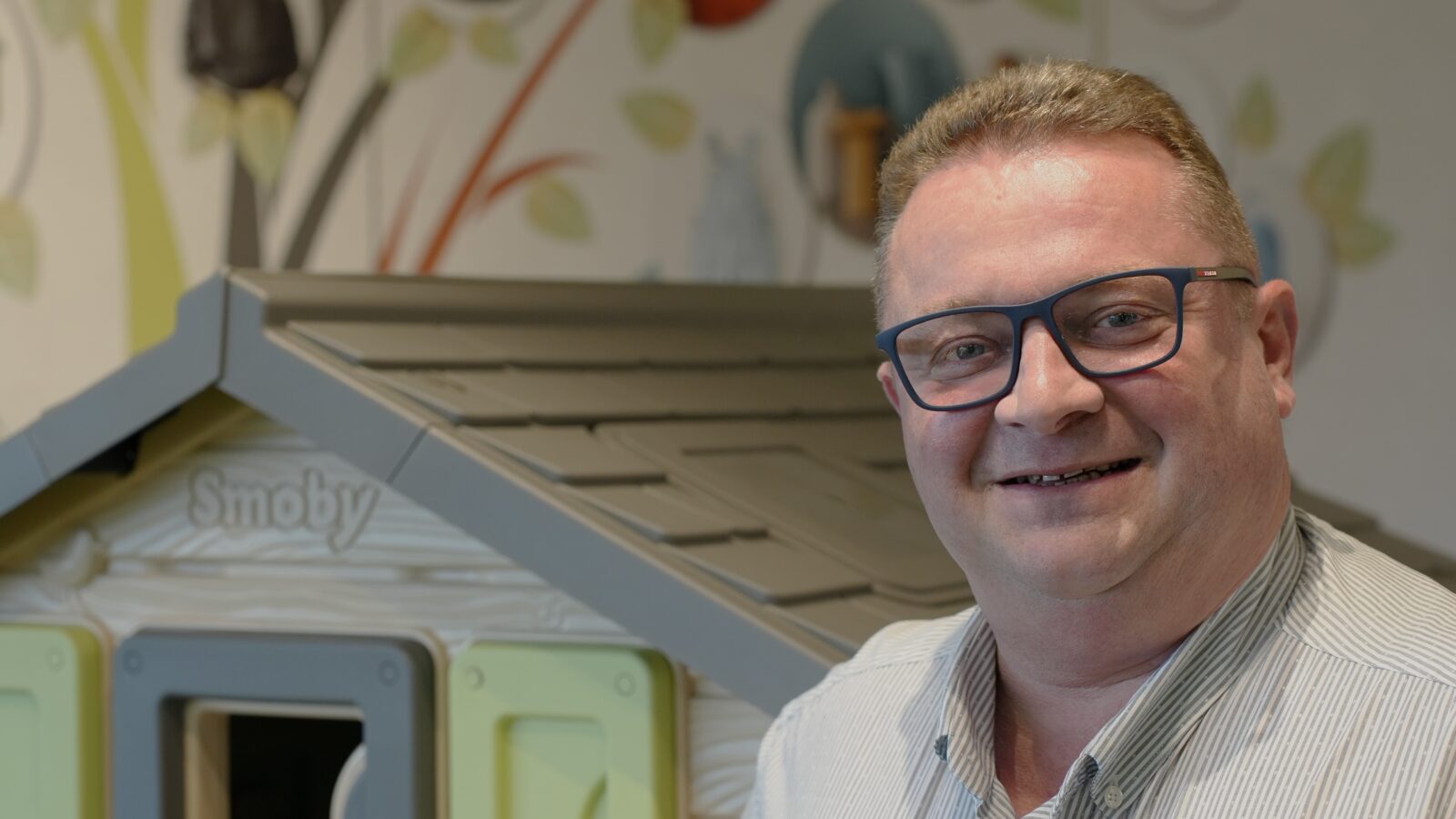
"When we develop a product at Smoby, we talk about durability, repairability and recyclability. The last link in the chain was missing: recycled plastic, and how to incorporate it into our products. We found in Ecomaison the ability to set up this virtuous circle, by finding sources and qualifying them."
Alexis Delorme, General Manager of Smoby Toys SAS
"Ecomaison is working with us to facilitate the implementation of EPR for toys, by liaising with various players in the recycling world."
Watch the video of Alexis Delorme and Alexandra Fanget, Head of Purchasing and Legal Affairs.
Interview with Élise Thomas, Research & Development (R&D) Manager at Smoby.
What role does R&D play in the development of eco-designed products at Smoby?
Elise Thomas: She's the guarantor! Although we're now involved in eco-design in partnership with Ecomaison, we've been working on it since well before we set up our Extended Producer Responsibility (EPR) channel. We use several levers. Firstly, we develop our products in such a way as to limit material mixes as much as possible, both between materials and between types of plastic.
We give priority to polyolefins - polyethylene for injection molding, and polypropylene for injection and blow molding - which are currently the best recycled plastics in France. And we integrate assembly clips as far as possible directly into the parts, in the same material, to avoid metal screws.
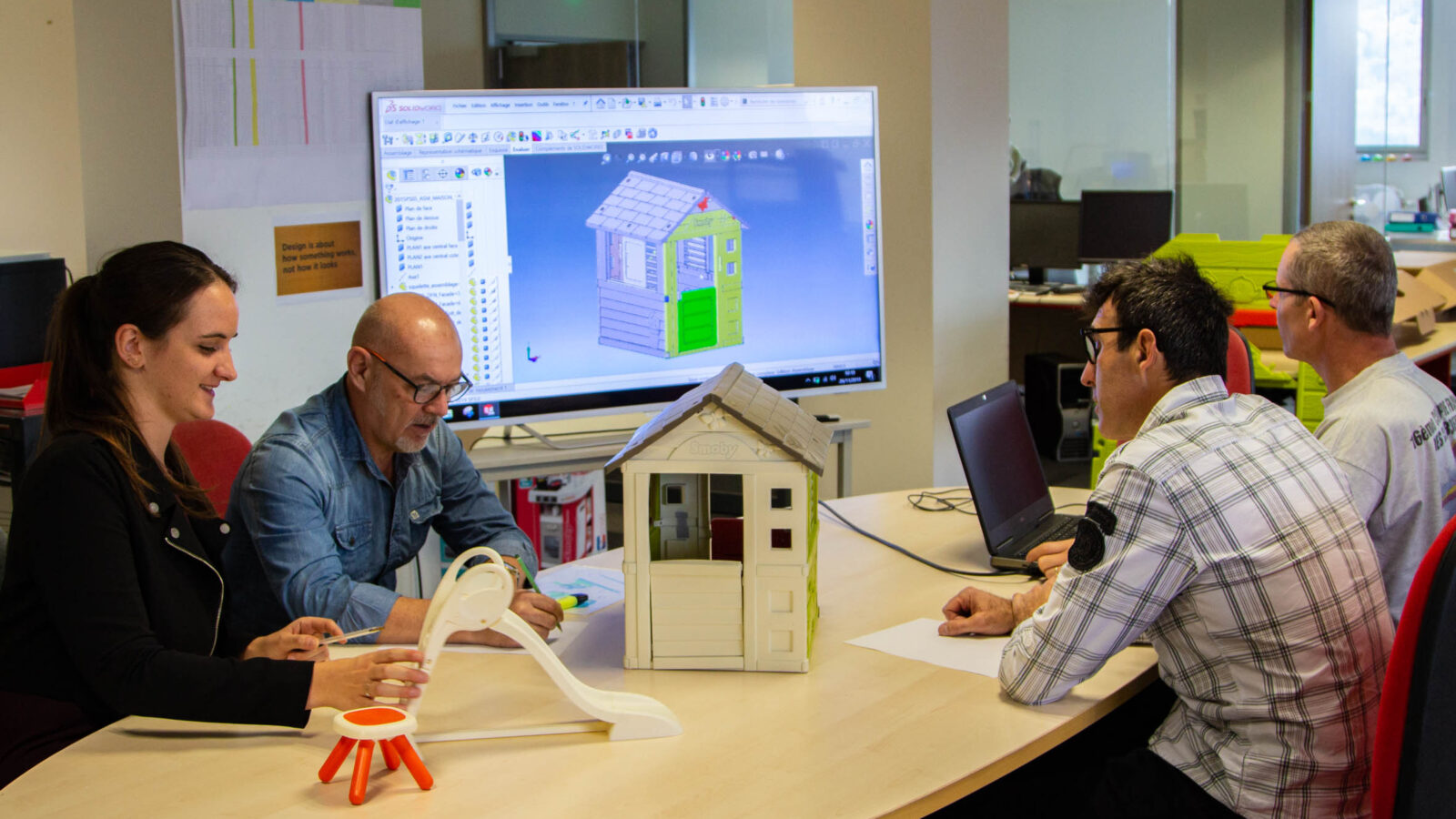
We also design products that are easy to dismantle. If the user needs to replace a part, or at the end of the toy's life, when it's time to put it in a recycling bin, he must be able to isolate the different materials without difficulty. Finally, we're working on the weight of our toys: the less plastic we use, the less oil we'll use! It's all about finding the right balance between lightness and strength, because there's no question of compromising the quality of our products.
Do you also work on production tools?
E.T: They're an integral part of our approach. We use hybrid or electric machines to manufacture plastic parts. From mold sizing to optimal tool loading, our aim is to keep energy consumption as low as possible in relation to the number of parts produced. We also use rheology software (fluid studies) to analyze upstream the behavior of molten plastic in the tooling, in order to position the material entry points in the best possible way, and to dimension their size and number, as this has an impact on the energy consumed. Nothing is left to chance.
What technical challenges do you face when working with recycled or eco-responsible materials?
E.T: The biggest challenge is color. Our products are supposed to be colorful! But recycled plastics are often gray or greenish, and not as easily colored as virgin material. We work with Ecomaison to find the right sources, even if they are more expensive, via integrators or contenders who offer less neutral materials or work with colorists to counteract this basic color. Whenever possible, we also source pre-sorted materials. In some sorting centers, there are machines for isolating parts of different colors.
Our other technical challenge is manufacturing. The fluidity of recycled plastics is less stable than that of virgin material. To obtain the desired shape, we often have to adjust our machines from one batch to the next. We learn to work differently. We're also taking a keen interest in emerging techniques that enable us to automatically readjust processes on our machines, which means less wasted time and less scrap.
What other challenges do you face?
E.T: They are linked to compliance with the European toy standard. In its section on chemical risk, it is very similar to the standard for plastics in contact with food. However, in a previous life, recycled raw materials may have been in contact with pollutants, such as washing powder. Of course, we only use batches of compliant materials, certified by the supplier.
If this is not the case, we have a sample analyzed by a laboratory before using the batch. Another part of the process concerns the mechanical aspect. To guarantee optimum product quality, Smoby has made the strategic choice to go beyond European standards, particularly in terms of load-bearing capacity.
However, the mechanical properties of recycled plastics are far inferior to those of virgin material, for example because they have been in contact with the sun or have already been processed several times. They're more tired! We are working to try and boost them with adjuvants, to help them regain sufficient properties. We are also incorporating this potential fragility into the design of new products.
"Eco-design is nothing new at Smoby, but Ecomaison is helping us to accelerate our approach, in particular by providing us with numerous contacts for finding recycled materials .."
Elise Thomas, Innovation Manager