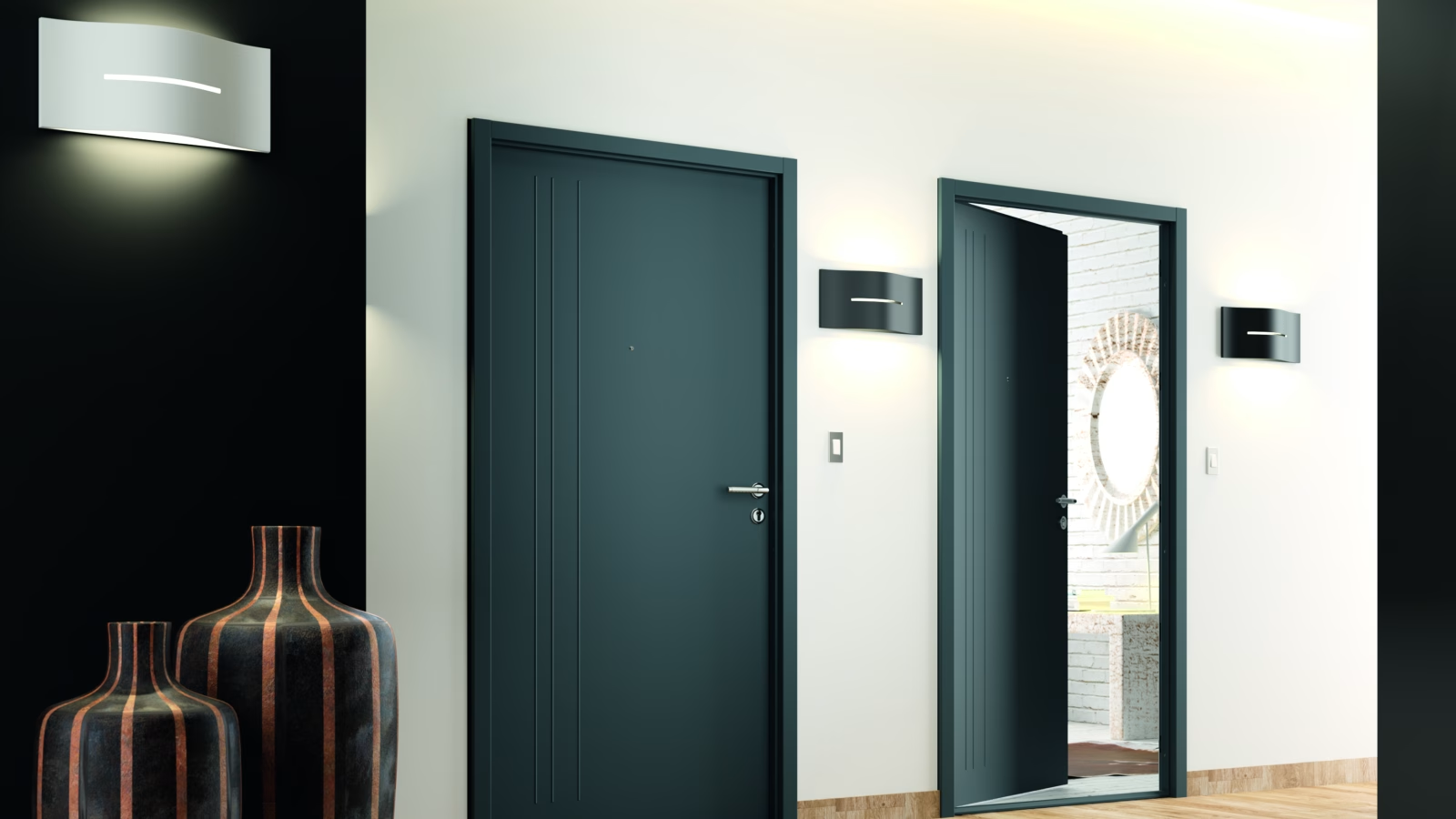
Eco-design at DEYA is taking on a new dimension with the support of Ecomaison. Specializing in door assemblies, door frames, and storage solutions manufactured in France, the industrial group has structured its environmental approach around its Prevention and Eco-design Plan (PPE)*. Jérôme David, Director of Marketing and R&D, discusses the actions taken so far and the next steps.
The Essentials
- DEYA is structuring its eco-design approach with Ecomaison.
- The PPE guides the group's environmental roadmap.
- Recycled materials, separability, and eco-modulations are at the heart of the research.
- Starting in 2027, DEYA will further integrate the circular economy into its products.
*The Prevention and Eco-Design Plan (PPE) enables a company to formalize the actions it takes to reduce the environmental impact of its products.
Could you tell us about the DEYA Group and its various business lines?
The DEYA Group is a French family-owned industrial group specializing in interior finishing for the construction industry. DEYA manufactures wooden and metal door assemblies, metal door frames, frames for sliding pocket doors, and scaffolding platforms. KAZED specializes in closet doors, walk-in closets, and storage solutions.
The group has four production facilities in France: one in Argentat for wooden doors, one in Romilly-sur-Seine for metal doors, and two in La Crèche—one dedicated to metal door frames, sliding door frames, and scaffolding platforms, and the other to KAZED products.
DEYA operates exclusively in the B2B sector, serving both the commercial and residential markets, in both new construction and renovation projects.
How did DEYA get started with its eco-design initiative?
French manufacturing is an integral part of the group’s history. We manufacture at our French facilities and prioritize domestic sourcing whenever possible.
Our environmental approach has taken shape more recently, driven in particular by clients such as Leroy Merlin. The work we’ve undertaken on sliding-door frames has allowed us to build awareness among our teams and then extend this approach to other products.
Environmental and Health Declaration Sheets (FDES) also marked an important milestone. They have helped us better understand the life cycle of our products and identify the key areas for action. Since 2020, this effort has expanded with the implementation of CSR, followed by the completion of group-wide carbon assessments.
How does Ecomaison support DEYA with its PPE?
We had already worked on a sector-specific business plan within the Technical Association of Manufacturers of Technical Door Units. But when it came time to draft our own plan, several questions arose: How does it relate to regulations? What is required? How do we move from a general framework to concrete actions?
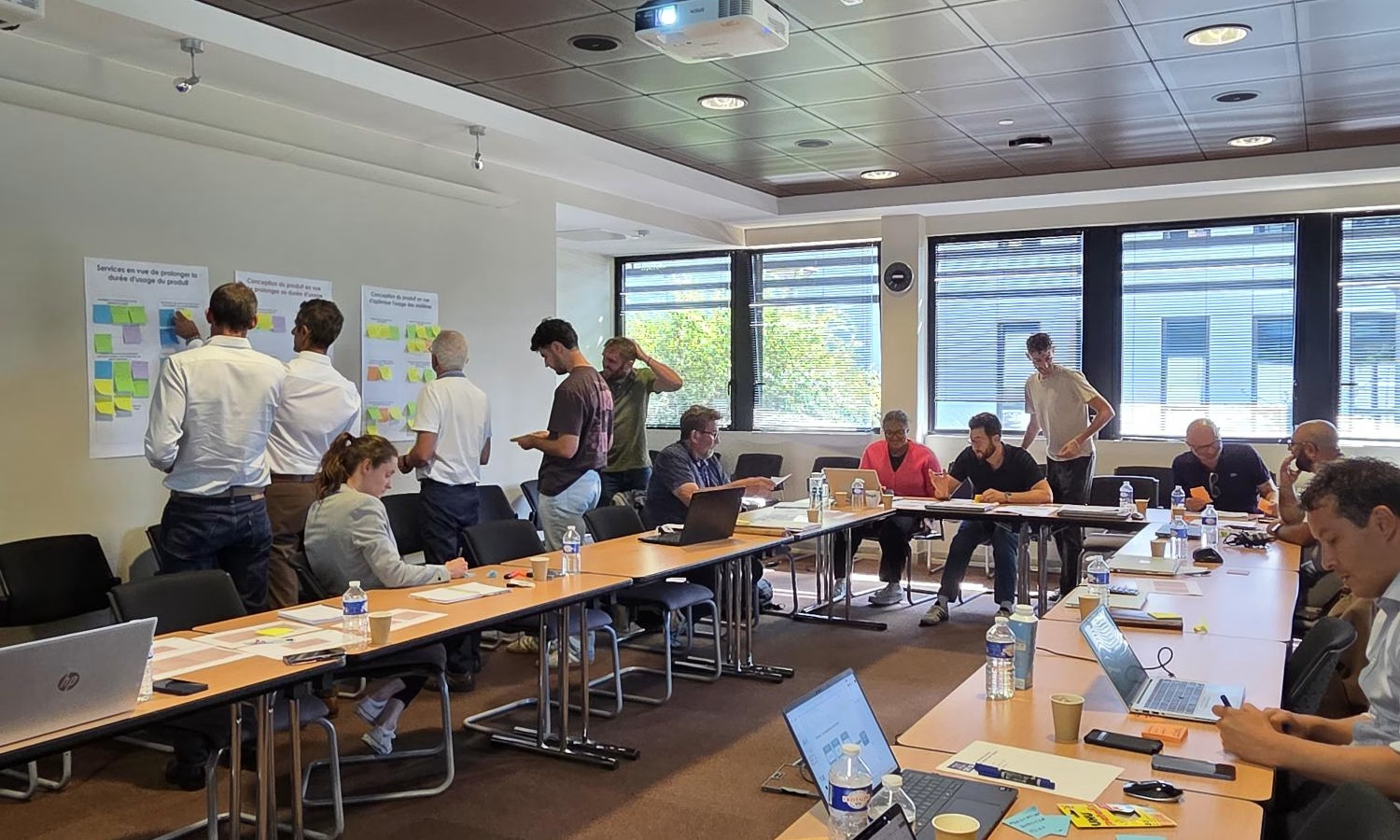
I then contacted Benoît Godon, Head of Eco-Design and Sustainability at Ecomaison. Our request coincided with the eco-organization’s own efforts to develop support programs for its members. Over the course of several months, we worked together with Ecomaison and Benoît Godon to develop three awareness-raising sessions. The involvement of outside experts gave the initiative greater impact and clarity. This work will now enrich our product development roadmap for the coming years.
Beyond the PPE, in what other areas does Ecomaison provide you with support?
We spoke with Arthur Jacquin, Key Account Manager for Furniture, about eco-adjustments, product coding, and incentives for incorporating recycled materials. Innovation Days also play an important role. I never imagined, at first, that an eco-organization could play such a broad role in supporting innovation. The feedback from manufacturers is particularly valuable: even when it concerns materials other than our own, it shows how companies have organized themselves and incorporated recycled materials into their products.
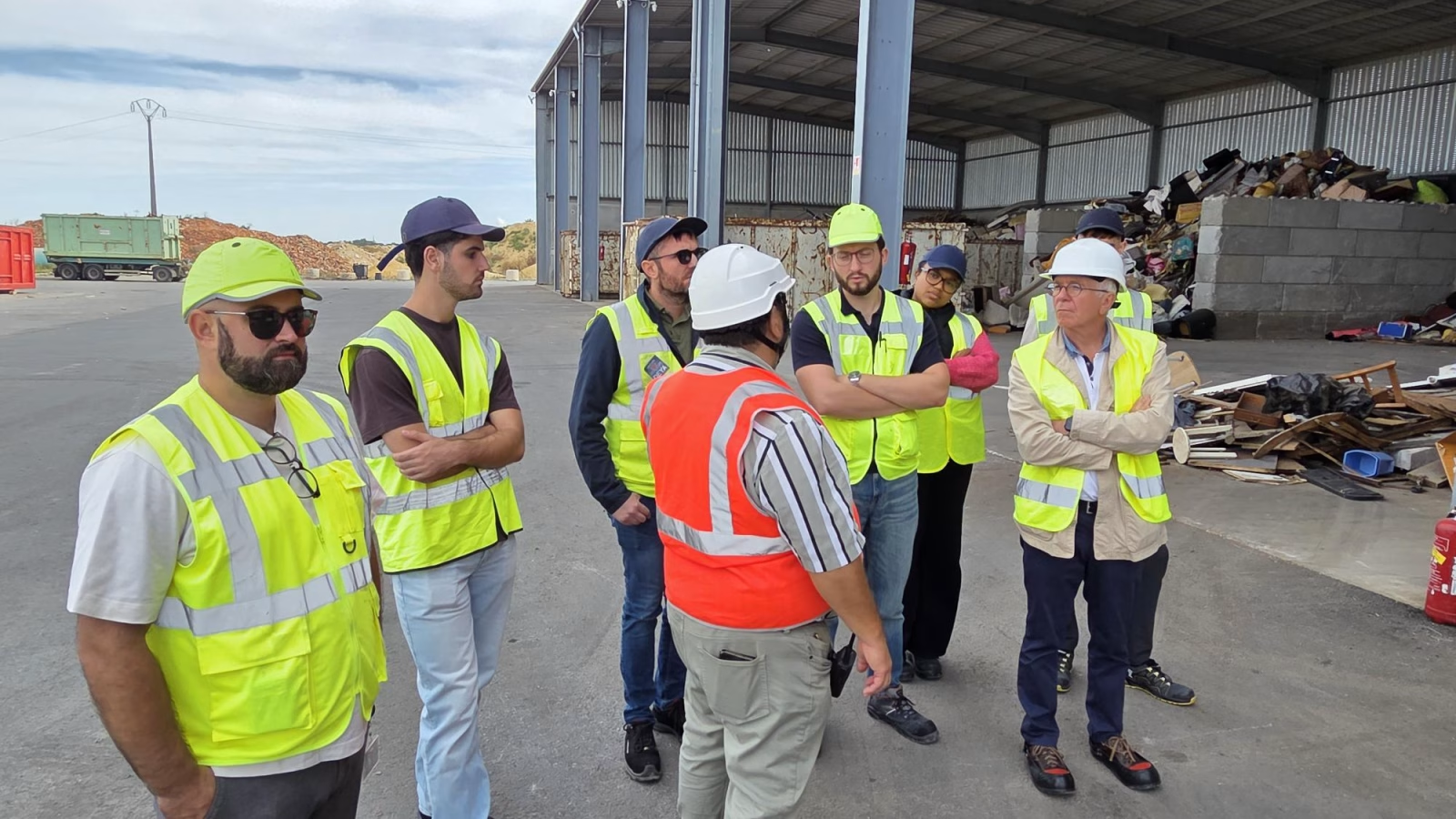
What did you take away from the tour of the Veolia sorting center in Migné-Auxances?
This visit had a greater impact than we had imagined. We saw how the products are actually handled and understood what can—and cannot—be separated under current operating conditions. This hands-on experience allowed us to assess the consequences of our design choices and better understand how sorting and recycling processes work. It also raised employees’ awareness of the volumes collected and of materials for which there is not yet a recycling solution.
DEYA is a shareholder in Ecomaison and participates in the governance of the PMCB sector. What does this involvement entail?
This commitment dates back to the very beginning of our relationship with Ecomaison. Since June 2026, I have also represented DEYA on the PMCB sector committee.
This involvement gives us a broader perspective on extended producer responsibility, the role and challenges facing eco-organizations, and their relationships with public authorities. It allows us to contribute to the dialogue and anticipate developments that will impact our business. Starting in 2027, we will implement an action plan that places greater emphasis on recycled and recyclable materials, material separability, and lessons learned from the PPE.