Information on the environmental qualities and characteristics of products and environmental labelling
Informing your customers about the environmental quality of your products will help them make an informed purchasing decision. The display of certain environmental qualities and characteristics of products is regulated by the French Anti-Waste Law for a Circular Economy (AGEC). Ecomaison provides its members with information and tools, and supports you in making product labelling simple and clear.
Since 2023, consumers have had to be better informed about the environmental qualities and characteristics of products, for each model concerned.
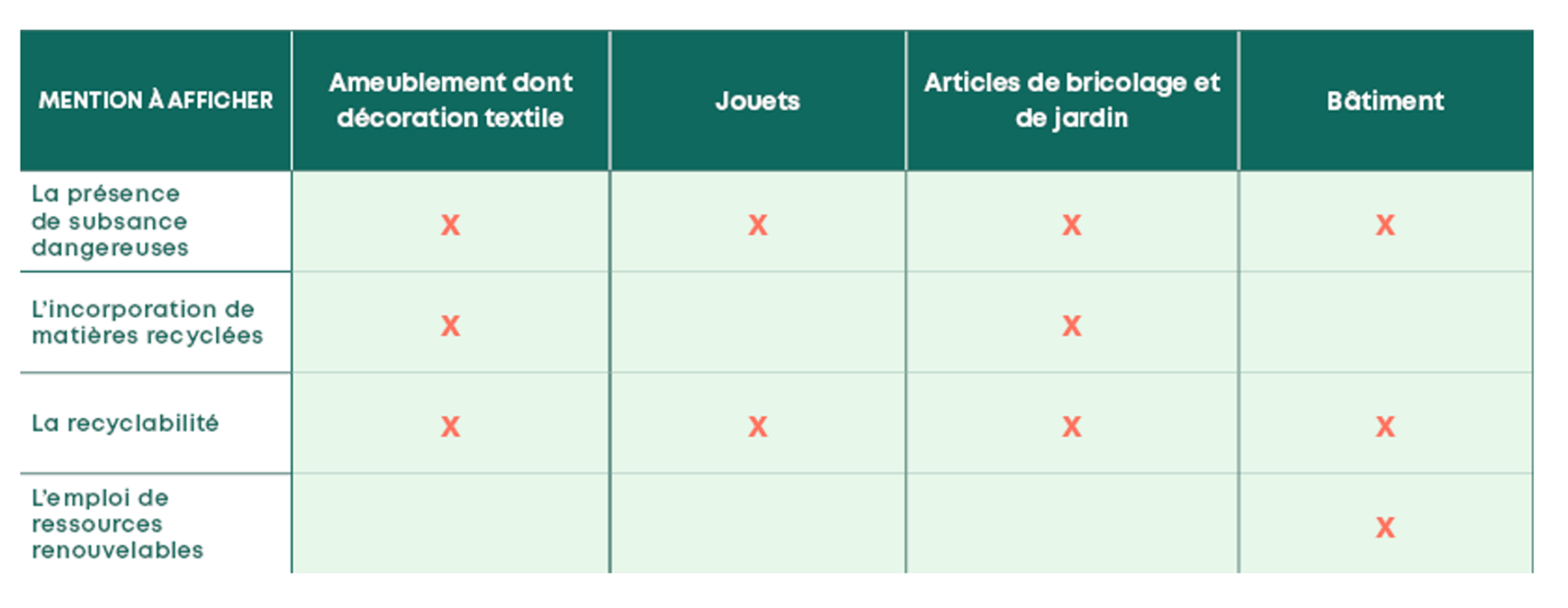
In short, manufacturers are obliged to inform consumers of the environmental qualities or characteristics (recyclability, incorporation of recycled materials and hazardous substances) of their products. To meet this obligation, they are required to provide a product data sheet, known as a QCE (Environmental Qualities and Characteristics) data sheet, via electronic means.
In addition, it is now forbidden to mention the claims "biodegradable", "environmentally friendly" or any other similar indication for any product or packaging.
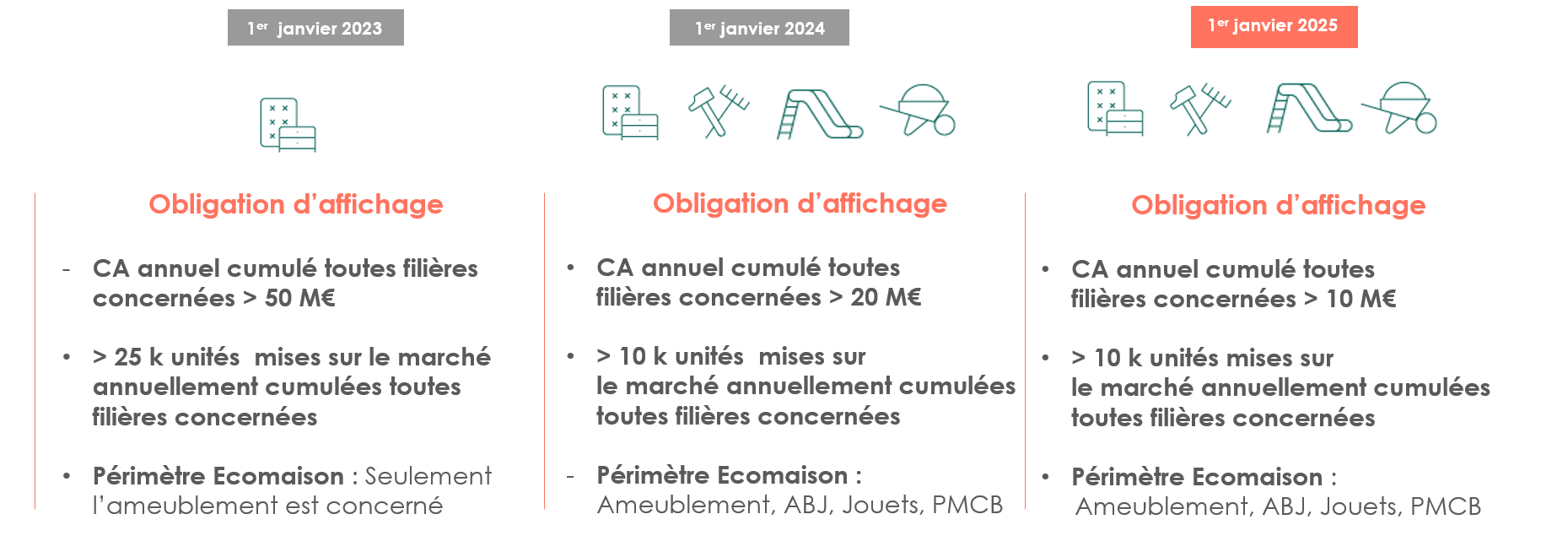
The regulations provide for gradual application, to enable everyone to get organized. The conditions of application apply under two cumulative conditions:
Sales figures
The number of market launches in France
These conditions apply to the total number of products subject to Extended Producer Responsibility placed on the French market each year during the last financial year.
List of sectors concerned:
Furnishings, including textile decorations, DIY and garden items, toys, building products and materials, household packaging, printed paper, electrical and electronic equipment, batteries and accumulators, chemical product containers.
The application timetable is as follows:
What are the compulsory posting conditions for QCEs?
The information must be provided in the form of a " product data sheet ", accessible free of charge at the time of purchase, and made available on a dedicated website or page. The title of the site or page or section of the dedicated page must be "product sheet on environmental qualities or characteristics", supplemented by the name and reference of the model concerned.
What do you need to know about Ecomaison channels?
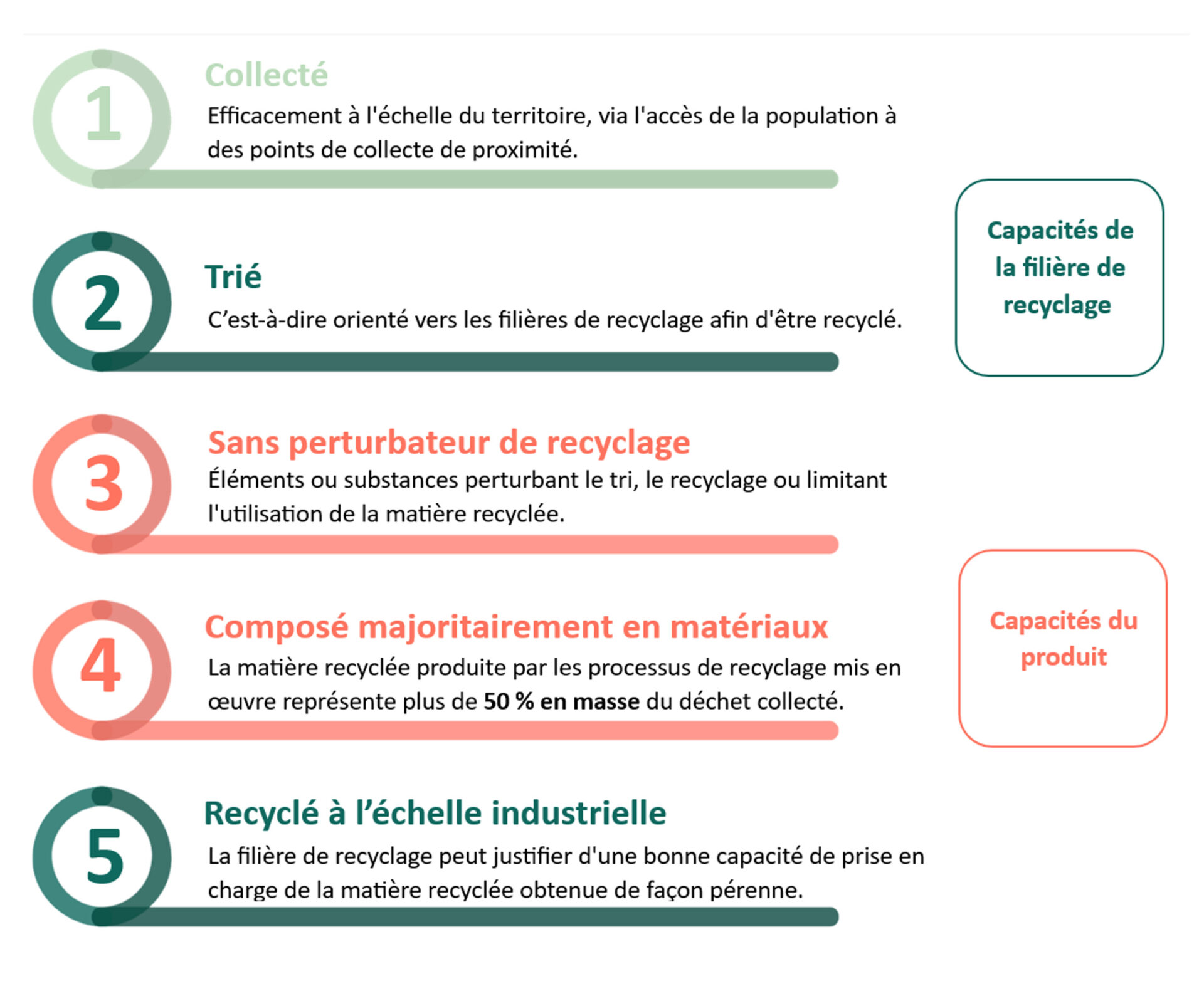
When can you indicate that your product is recyclable?
If these conditions are met, you are required to display one of the following notices:
" fully recyclable ": reserved for products that can be recycled to over 95%.
" Majority recyclable ": reserved for products that can be recycled to more than 50%.
" product recyclableinto a product of the same type ": reserved for products that can be recycled at least 50% in a product from the same EPR channel (closed loop).
The environmental quality of products is having a growing impact on consumers' purchasing decisions. With our tool for measuring the recyclability of your products, Ecomaison can help you make your display clear and transparent, and enhance the value of your eco-design initiatives.
Fabien Cambon, Technical and Innovation Director at Ecomaison
Determine the recyclability of your products
Ecomaison provides you with a tool to determine the recyclability of your products for the following channels:
The obligation to display information on the presence of a hazardous substance applies whenever it is present in a concentration of more than 0.1% by mass in a substance, mixture or article, as defined in points 1, 2 and 3 of Article 3 of Regulation (EC) No. 1907/2006, known as "REACH".
Information on hazardous substances can be displayed via :
Product sheet
The Scan4Chem application. The latter is financed by the European Commission as part of the LIFE program, in which France plays an active role via the French National Institute for Industrial Environment and Risks (INERIS).
The statement to be indicated is: "Contains a dangerous substance " or " Contains a substance of very high concern ". The information is completed with the name of each hazardous substance present.
Producers of products or building materials covered by the an environmental declaration (voluntary communication)have an obligation to inform consumers about the use of renewable resources as of January 1.er January 2024.
A renewable resource is a:
Natural, derived from plant or animal species,
Whose stock can be reconstituted over a short period of time on the human time scale,
By renewing itself at least as fast as it is consumed.
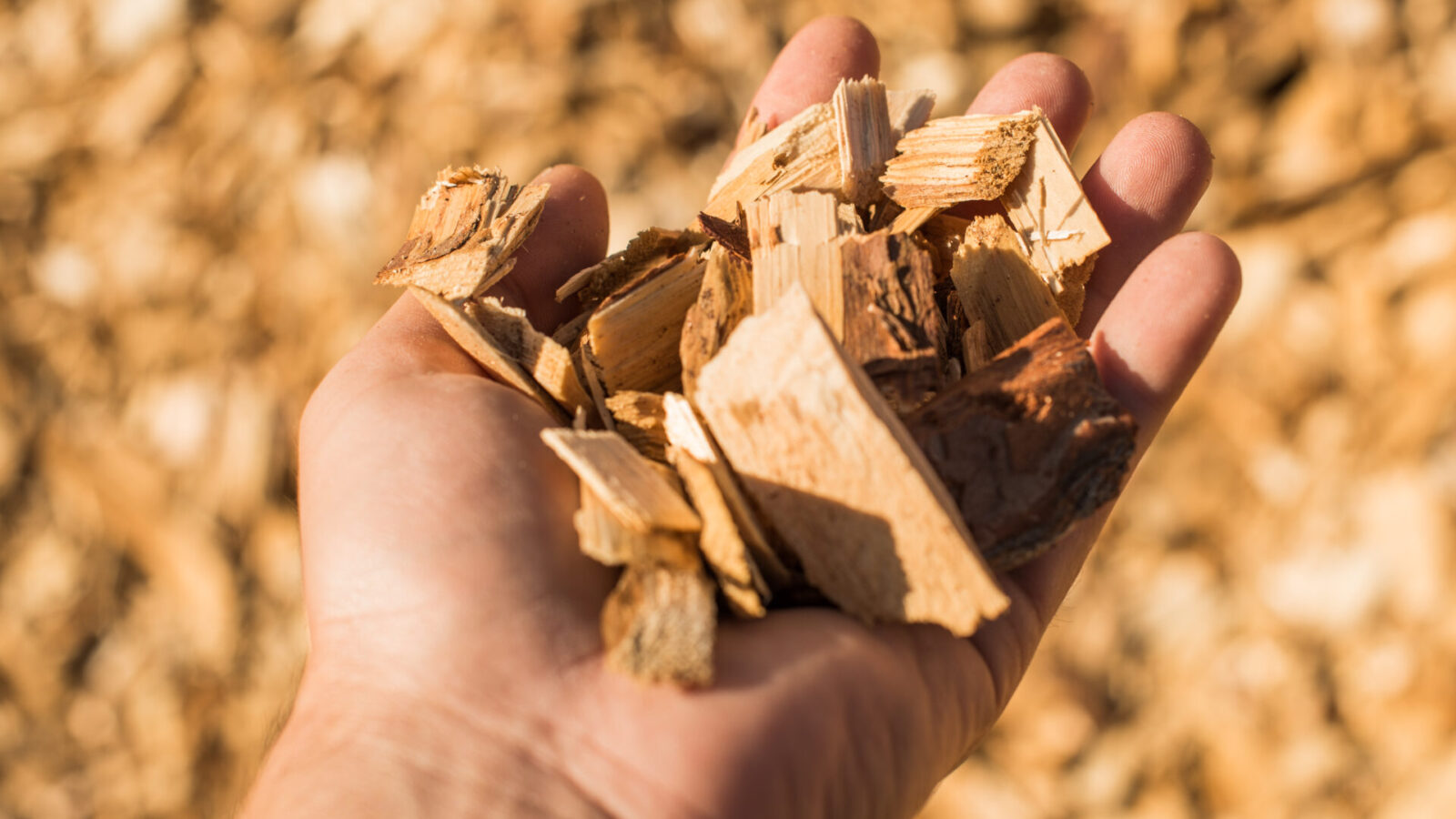
Renewable resources therefore include plant-based products such as wood, cork, bamboo, hemp, flax, cork, etc., as well as animal-based products such as sheep's wool.
On the other hand, geosourced materials are excluded, given the number of years it takes to renew these resources, which can take up to a million years.
According toArticle R171-17 of the Code de la construction et de l'habitation, "information on materials from renewable resources incorporated, translated into an indicator of carbon storage from the atmosphere and expressed through an indicator of the quantity of carbon from the atmosphere stored in the construction or decoration product. Renewable resources are derived from plant or animal species with their own reproductive capacity, and whose exploitation is such that human activity does not exceed their natural capacity for renewal. All environmental declarations for products and equipment in the building sector are referenced on the INIES website.
Financial contribution premiums and penalties
Article 62 of the AGEC law introduces a system of bonuses and penalties, also known as bonus-malus, which, depending on environmental performance criteria, reduce or increase the amount of eco-contribution.
Bonus or penalty criteria will have to be displayed, such as the presence of hazardous substances or the recyclability of products, in accordance with the decree of April 29, 2022 on consumer information on environmental qualities and characteristics.
Environmental labelling consists in providing transparent, objective and verified information for consumers, in the form of a grade (A, B, C, D, E), on products and services, on shelves or on the Internet.
Environmental labelling is not currently compulsory. Manufacturers wishing to introduce such a system may choose to communicate voluntarily on the environmental aspects of their products. In this case, they must comply with the methodology validated by the public authorities.