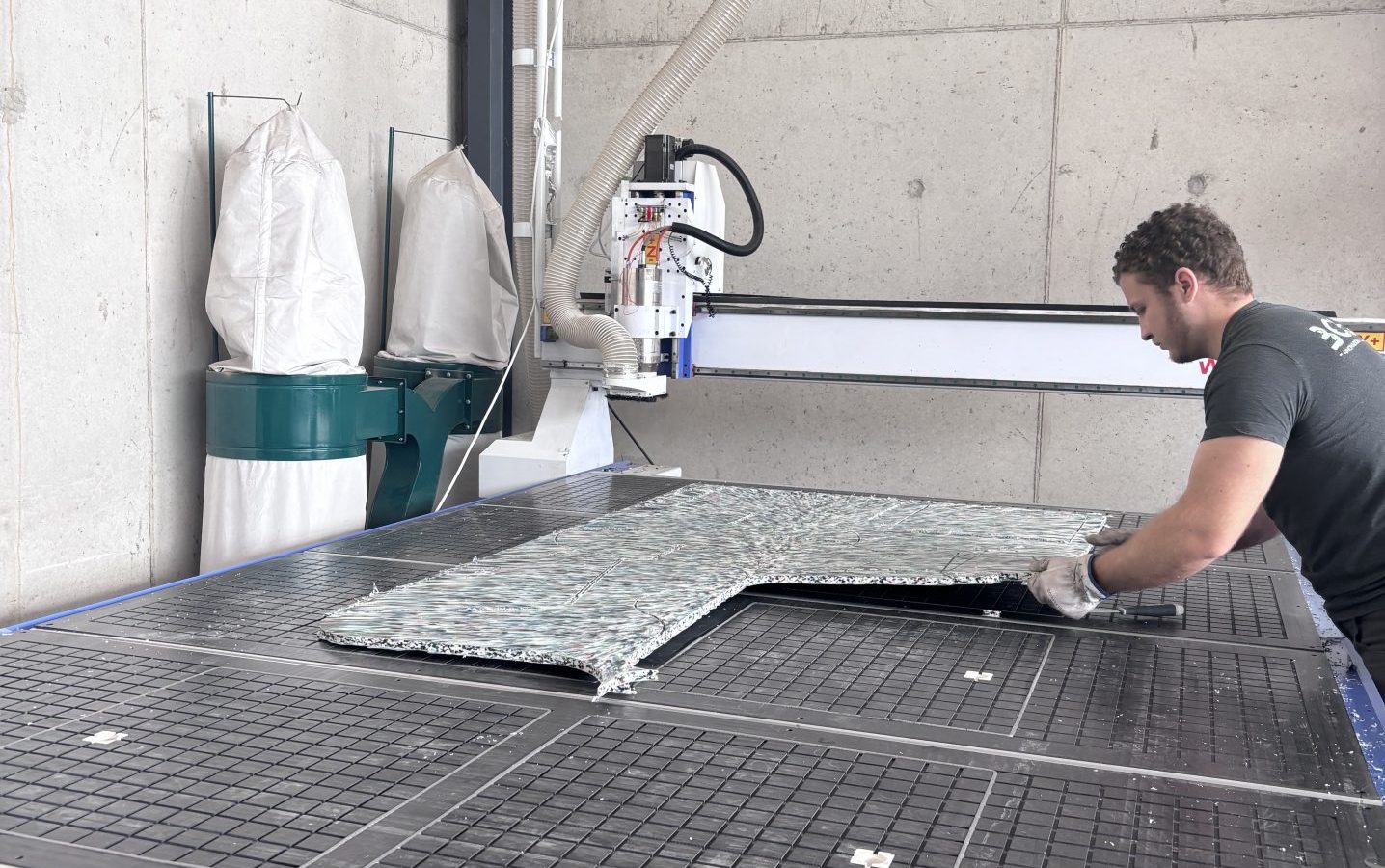
Driven by a desire to combine innovation, inclusivity, and the circular economy, Jean Sauttreau founded the company Boudi. Using plastic waste, his team—composed mainly of people with disabilities—manufactures and cuts panels using an in-house thermocompression process. This innovation owes much to the support of Ecomaison, as do the company’s promising prospects for growth.
Can you tell us about Boudi?
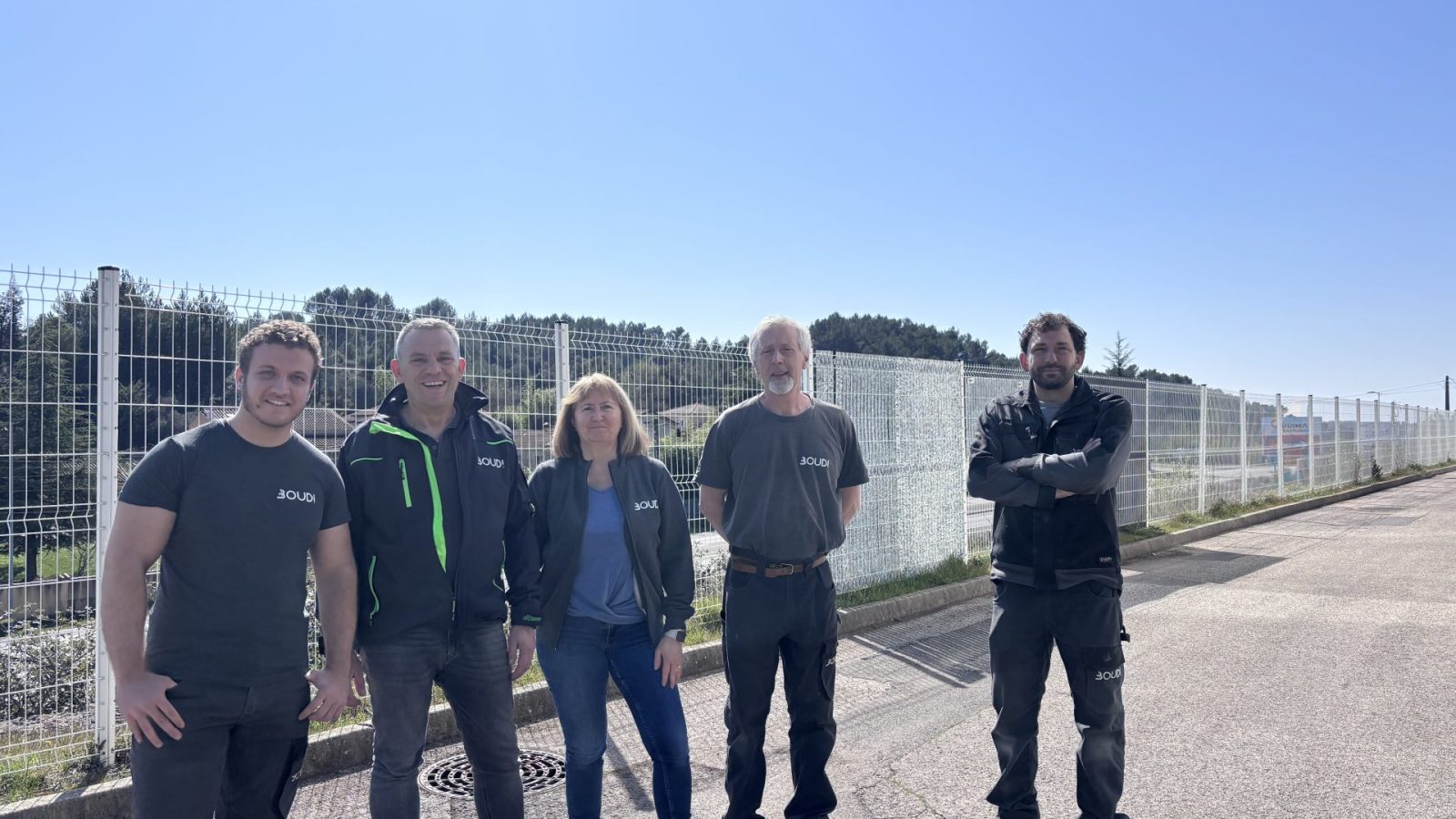
Jean Sauttreau: Boudi is a social and solidarity economy enterprise founded in January 2023. We recycle post-consumer plastic waste through innovations based on the circular economy model, and we promote the integration of people with disabilities into value-added technical roles. Today, we are an innovative microbusiness with five employees, three of whom have disabilities and work in production. I’d add that the name, Boudi, comes from a local expression that evokes the exclamation “Bon Dieu,” used to express surprise, admiration, or weariness.
Boudi, Profile
- Created: January 2023
- Business: Boudi SAS, an innovative social enterprise in the Cévennes region
- Location: 100 Chemin de Panissière, 30340 ROUSSON
- Staff: 5 people (3 in production, one assistant, and the president)
- Partners: Ecomaison , IMT Mines Alès, CREALIA Occitanie, Alès Agglomération, ADEME
- Core business: manufacturing and cutting panels from recycled plastic
How do you work with Ecomaison?
Jean Sauttreau: We have two partnerships. The first involves substantial financial support from Ecomaison, which covers part of the costs associated with our innovation efforts. The second, equally important partnership involves securing our sources of recycled raw materials. This is essential for continuing our operations and research efforts. To be honest, without Ecomaison’s support, we wouldn’t be where we are today!
What do you make from post-consumer plastic?
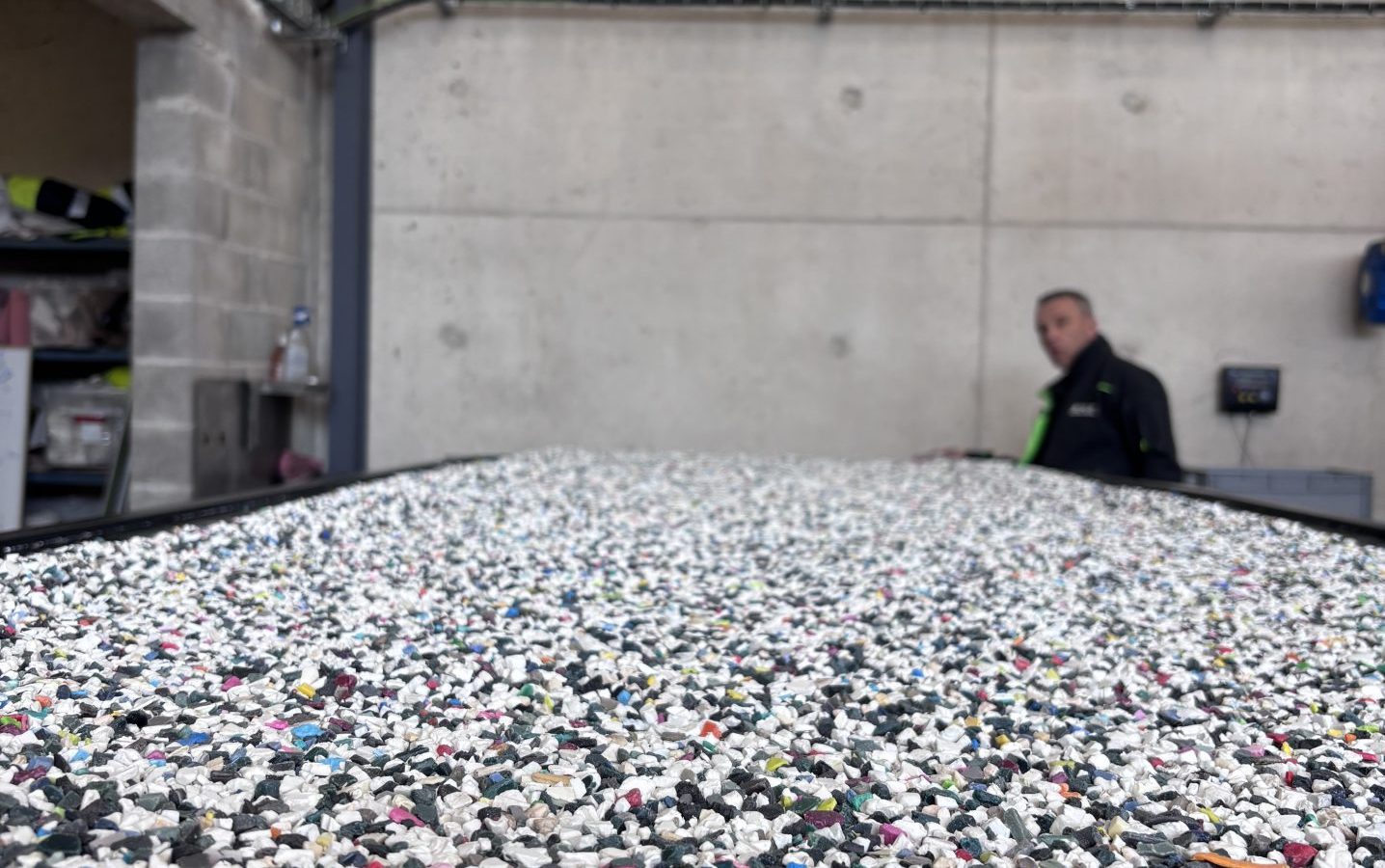
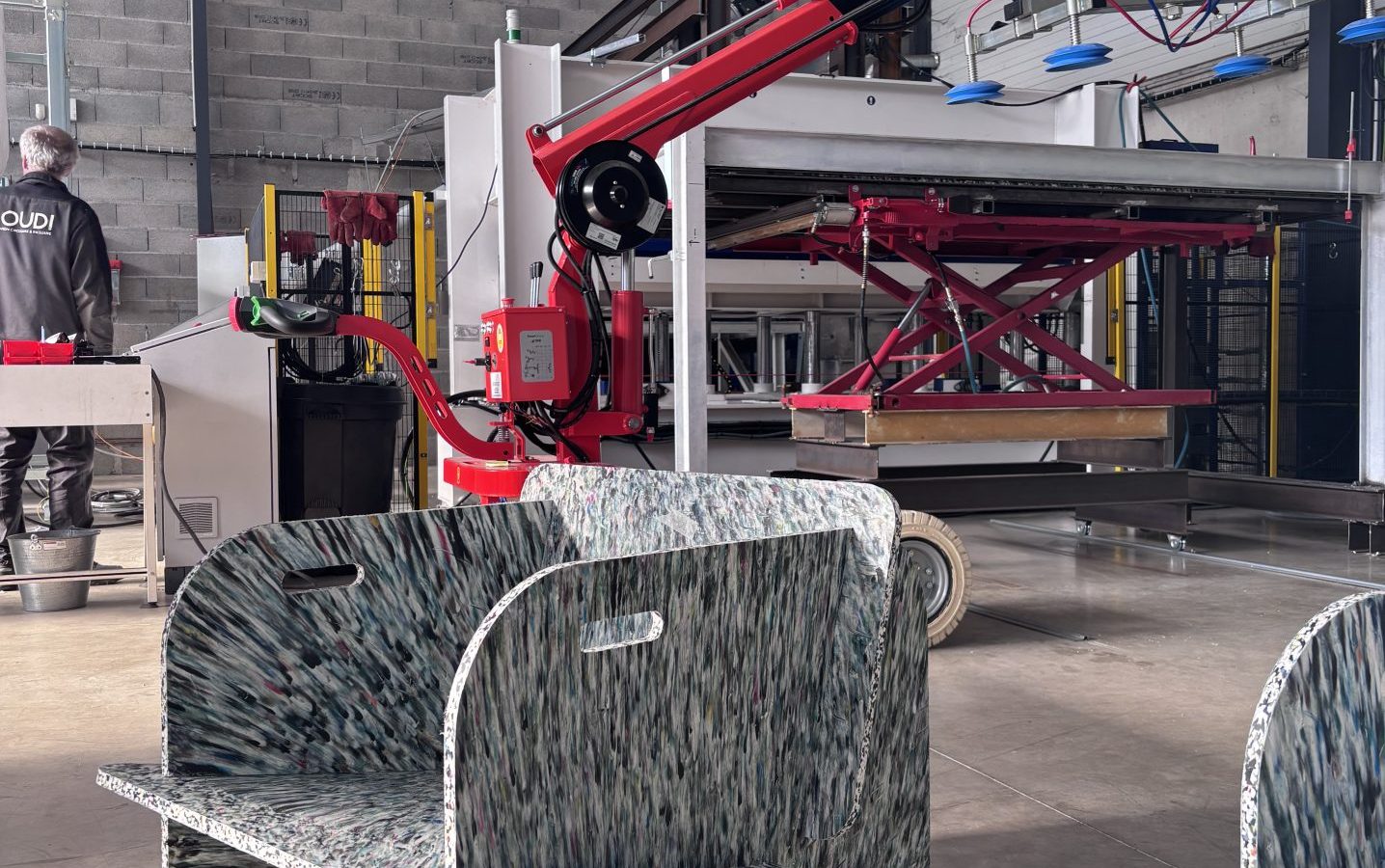
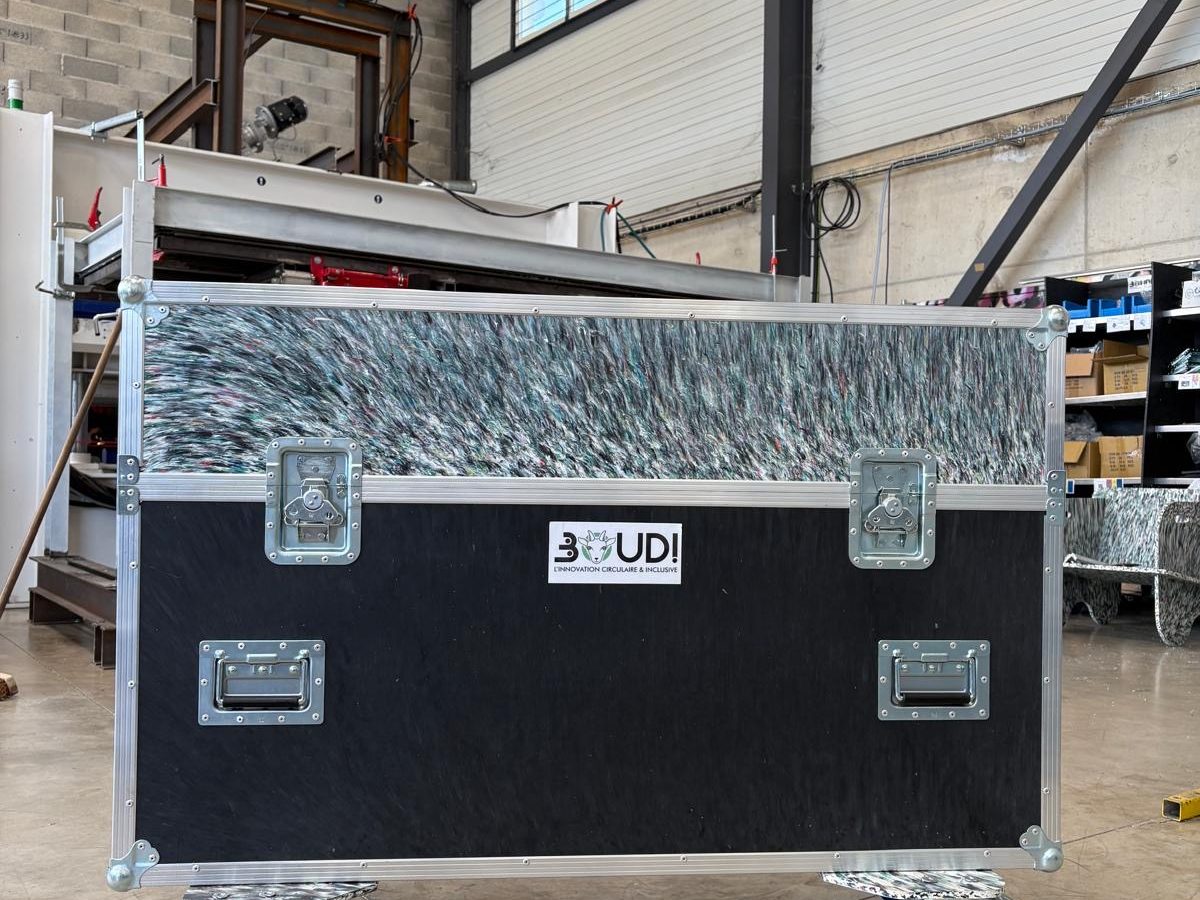
Jean Sauttreau: We source plastic waste from a recycler in the form of shredded material. Our enormous press (over 3 m x 1.30 m) heats the material and applies very high pressure to it, much like a panini press. We manufacture panels of various thicknesses, ranging from 1 to 15 millimeters, sold either as raw sheets or cut and assembled. The advantage of polypropylene is its abrasion resistance and excellent mechanical properties. We started out by manufacturing formwork for the construction industry. Then our material attracted interest from other industries, so we began producing panels for signage, construction site fencing, flight cases (large wheeled crates) for events, displays for retail chains, and more. In response to customer requests, we are constantly expanding our product line.
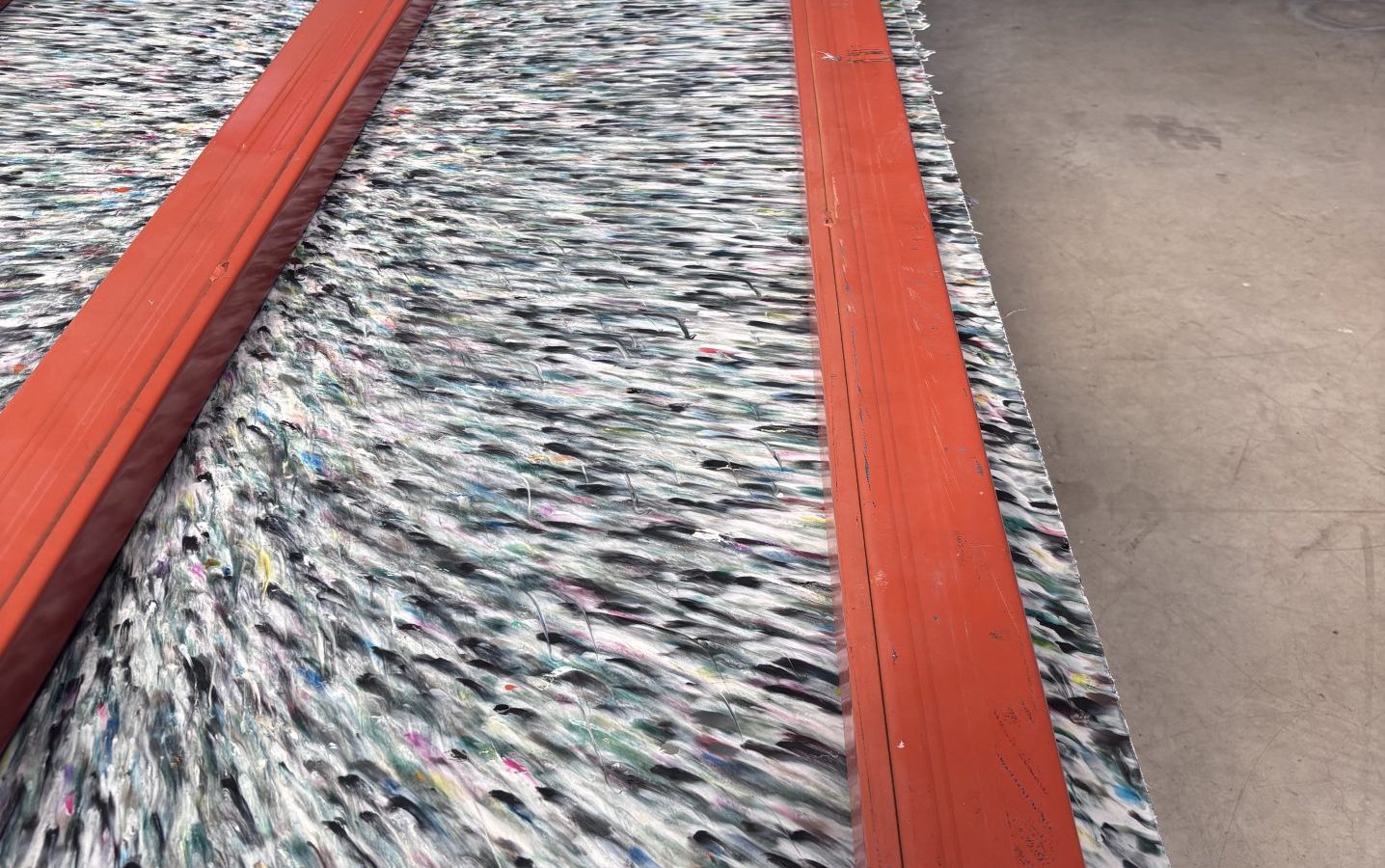
To that end, is securing your supply a crucial requirement?
Jean Sauttreau: Yes, in fact, that’s the purpose of our second contract with Ecomaison. It covers the procurement of recycled raw materials from its partners. This provides these recycling centers with an additional outlet. And from our perspective, we’re assured of a steady supply over the next five years—in terms of volume, price, and quality. Ecomaison’s support is both crucial and foundational. It helps us anchor our approach within a long-term vision. This partnership reassures our customers and also allows us to join an ecosystem of manufacturers and organizations committed to recycling and recovering their production or consumer waste.
What technical challenges are you facing in this process?
Jean Sauttreau: We want to produce a material that is not only reusable, but also machinable and recyclable again. This is a challenge we’ve addressed in our research to achieve a closed-loop circular system. Furthermore, depending on their intended use, plastics incorporate other elements such as talc or fibers. These products, known as fillers, alter the physical and chemical properties of plastics. We have therefore developed a model robust enough to work with all of these products. For each new source of raw material, we conduct tests on its composition to determine the optimal pressure, temperature, and press duration, ensuring consistent production over a given period.
What are your short- and long-term plans?
Jean Sauttreau: Given our investments in production facilities, our priority is to expand our business and applications while securing our customer base through 2026. Improving our productivity will also enable more people with disabilities to join our team.
-
- 200
- metric tons
plastic recycled per year within the next 2 or 3 years
-
- 11
employees within the next 3 years
-
- 75
- %
people with disabilities