Professionals Reuse: Mobidécor and Ecomaison Build Lasting Relationships 

Reuse: Mobidécor and Ecomaison Build Lasting Relationships 

Last updated on

Reading time 4 min

Mobidécor, a specialist in manufacturing furniture for public and private organizations, highly recommends the services offered by Ecomaison. Through us, the company is connected with social economy organizations that collect products to give them a second life. This virtuous cycle is illustrated by a recent initiative in Essonne.

A combination of two areas of expertise

Founded in 2016, the Mobidécor brand brings together seven companies dedicated to manufacturing furniture for public institutions (school chairs and tables, bookcases, storage cabinets, dressers, small desks, etc.). It has three production sites:

  • The one in Portes-lès-Valence (26) specializes in mass-produced wooden furniture;
  • The "Grande Série Métal" is manufactured in Mâcon (71);
  • and small- and medium-volume production of metal tubing takes place in Bonson (42).

For Vincent Mazancieux, marketing director at Mobidécor, this is a key differentiator: “Few companies produce both small-batch and mass-produced items, as these require two distinct sets of expertise.” 

Mobidécor by the Numbers:

    • 400

    employees

    • 3

    production plants

    • 6000

    products, or 10 million possible combinations

    • 1 600 000

    products sold per year

A Consistent Commitment to Reuse

In line with market expectations, Mobidécor has chosen to use 90% recyclable materials, primarily wood and metal. “For about a year and a half now, more and more local governments have been asking us about the percentage of our materials that are recycled and recyclable. Requests for proposals also ask for details on our reuse policy,” explains Vincent Mazancieux.

At the same time, the company is exploring the possibility of systematically collecting its furniture that is no longer in use, in order to disassemble it, repaint it, and then reuse it.

A Valued Partnership with Ecomaison

Over the past two years, Mobidécor has formed a partnership with Ecomaison, a decision based on several factors.

“I’ve found great people to work with, and our communication flows smoothly. And calculating the eco-contribution is very simple,” explains Vincent Mazancieux. For him, Ecomaison’s biggest advantage lies in its range of services: providing a dumpster and connecting clients with organizations in the social and solidarity economy (SSE). “The quality of service and their willingness to listen are remarkable. Ecomaison is committed to finding sustainable solutions.”

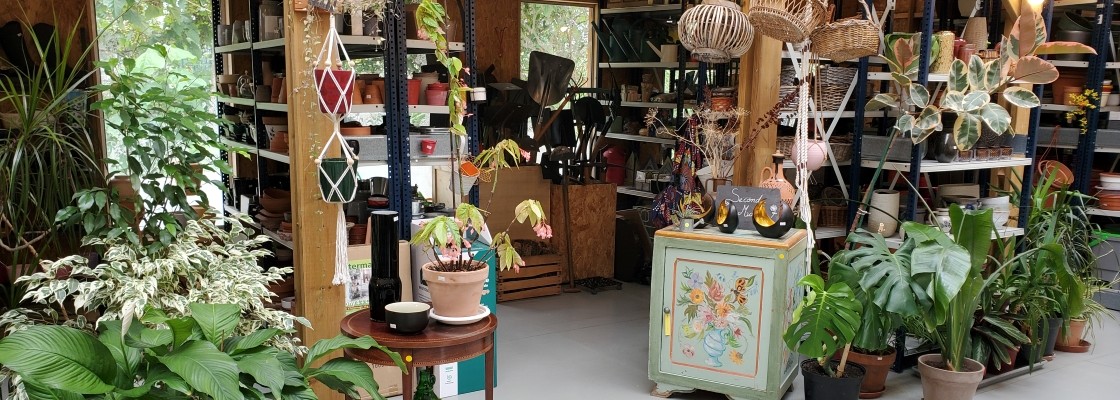
Mobidéor has a nationwide network, so when a site is scheduled for “cleaning out”*, Ecomaison identifies a social economy enterprise that might be interested in recovering the furniture. And if reuse isn’t possible, the eco-organization can collect the waste anywhere in the country.

A prime example of a reuse initiative

On February 23, 2026, a high school in Essonne wanted to replace its chairs and tables. Paul Chavassieu, Head of Northeast Regional Development at Ecomaison, contacted Emmaüs Longjumeau.

For its director, Elena Azra, the operation was a win-win: “We’ve had an agreement with Ecomaison for about ten years; they’re always very responsive in offering us products. It’s the only source of income for our community of about a hundred people. This time, we were lucky enough to sort through the items and salvage 420 chairs in good condition. We loaded them into our 20-cubic-meter truck and sold them in lots. They sold out in three or four days.”

“The Mobidécor-Ecomaison partnership is successful because the supplier’s involvement greatly facilitates the reuse of furniture. Reuse is the most sustainable way to manage the end of a piece of furniture’s life cycle, as demonstrated by the project at the high school. From an environmental standpoint, we have extended the products’ lifespan, and from a social standpoint, we have provided employment opportunities for people in job training programs. From a business perspective, the high school was satisfied with the exemplary nature of the initiative.”

Paul Chavassieu, Head of Regional Development for the Northeast